When a couple has been trying to conceive for a long time, attention often centers on the woman: Is her cycle regular? What is her AMH? Is she ovulating? Does she have PCOS?
But fertility is a shared journey. Male reproductive health and sperm health are also important parts of conception. Men should therefore take an active role in preparing for pregnancy, especially when a couple has been trying without success.
For conception to occur, enough sperm must be available to reach the egg. A low sperm count or concentration can reduce the likelihood of natural conception, although it does not automatically mean pregnancy is impossible. Semen analysis is one of the basic tools used to evaluate male reproductive health.
Sperm need to move effectively through the female reproductive tract to reach the egg. Reduced motility can make this process more difficult. Motility is therefore one of the parameters commonly assessed in a semen analysis.
The shape and structure of sperm are also considered during semen evaluation. Semen parameters should be interpreted together and according to professional standards. A single number should not be used to decide whether a man is or is not capable of fathering a child.
Hormones are involved in sperm production and male sexual function. When clinically indicated, a physician may evaluate hormones or other factors. Men trying to conceive should not self-prescribe testosterone or hormone-altering products without medical guidance because some hormonal treatments can suppress sperm production.
Male fertility does not decline in exactly the same way as female fertility, but age and overall health still matter. Chronic disease, metabolic health, certain medications, and medical history can all be relevant to reproductive health.
Smoking is harmful to overall health and has been associated with adverse reproductive effects. Heavy alcohol use can also affect general health, hormones, and reproductive function. The preconception period is a useful time for both partners to build healthier habits.
The testes function at a temperature lower than core body temperature. Heat exposure and certain occupational or environmental exposures may be relevant when assessing male fertility. Men who regularly work around high heat or chemicals should mention this during a medical evaluation.
Long-term stress, inadequate sleep, inactivity, and an unbalanced diet can affect overall health and quality of life. Men preparing for pregnancy should pay attention to sleep, nutrition, physical activity, weight, smoking, alcohol, and mental well-being.
Some reproductive conditions, infections, injuries, surgeries, or other medical problems can affect fertility. These situations require proper medical evaluation rather than relying only on supplements.

Do not wait until the female partner has completed multiple tests before considering male reproductive health. Preconception preparation is something both partners can begin together.
A varied diet containing vegetables, fruit, adequate protein, healthy fats, and essential micronutrients supports overall health. If you use supplements, consider the ingredients, dosage, your health conditions, and any medications you take.
Stopping smoking, limiting alcohol, sleeping adequately, and staying physically active are more meaningful long-term steps than relying on a single "sperm-boosting" food or product.
When a couple has been trying to conceive for some time, semen analysis is often a useful part of male evaluation. If the results are abnormal, a healthcare professional can advise whether repeat testing or further evaluation is needed.
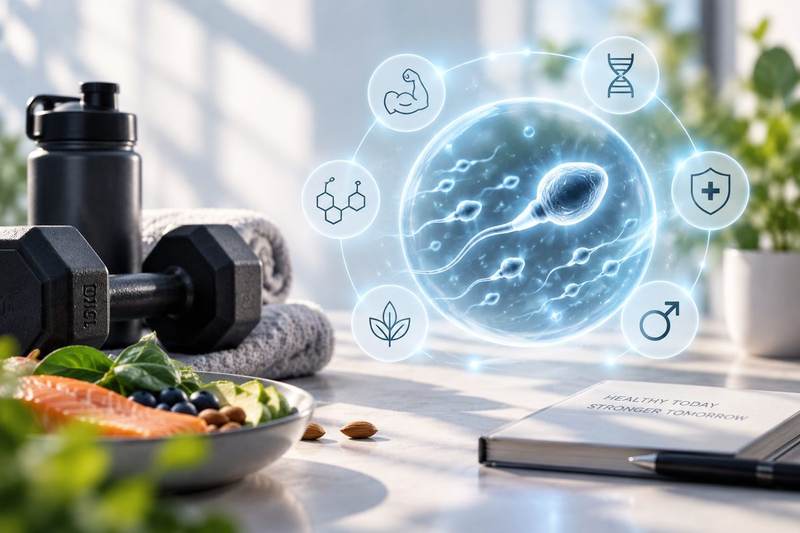
Big changes are easier when they're broken into small, everyday habits. Since sperm take about three months to develop, think of this as a three-month plan:
Many men feel unsure about what to say at a fertility appointment. Bringing a short list can make it feel easier:
For a closer look at what affects sperm movement day to day, see our guide to sperm quality.
When pregnancy has not happened, it should not automatically be assumed that the problem is female.
Instead of asking, "What should my wife take so she can get pregnant faster?" a more useful question is: "What should both of us do to understand and support our reproductive health?"
This approach is medically more complete and helps prevent the woman from carrying the emotional burden of the fertility journey alone. Preparing for pregnancy is a journey for both partners.
Message AGO Fertility Care on WhatsApp and share both partners' ages, how long you have been trying, the woman's menstrual-cycle pattern, relevant male-health information, and any semen analysis or other fertility test results you already have. We can help you understand what information may matter and which support options may fit your journey.
Chat With AGO on WhatsApp