If you've ever dealt with that maddening itch, a burning sting when you pee and thick white discharge, you're far from alone. Up to three out of four women will have a vaginal yeast infection at some point. Most are treated with an antifungal medicine, either an over-the-counter cream or suppository used for one to seven days, or a single prescription pill. If it's your first one, you're pregnant, or it keeps coming back, check in with a doctor before treating.
Yeast infections are rarely serious, but they can make everyday life, sleep and intimacy uncomfortable. The good news is that they usually clear up quickly with the right treatment. Here's what's happening in your body, how to recognize an infection, and what actually helps.
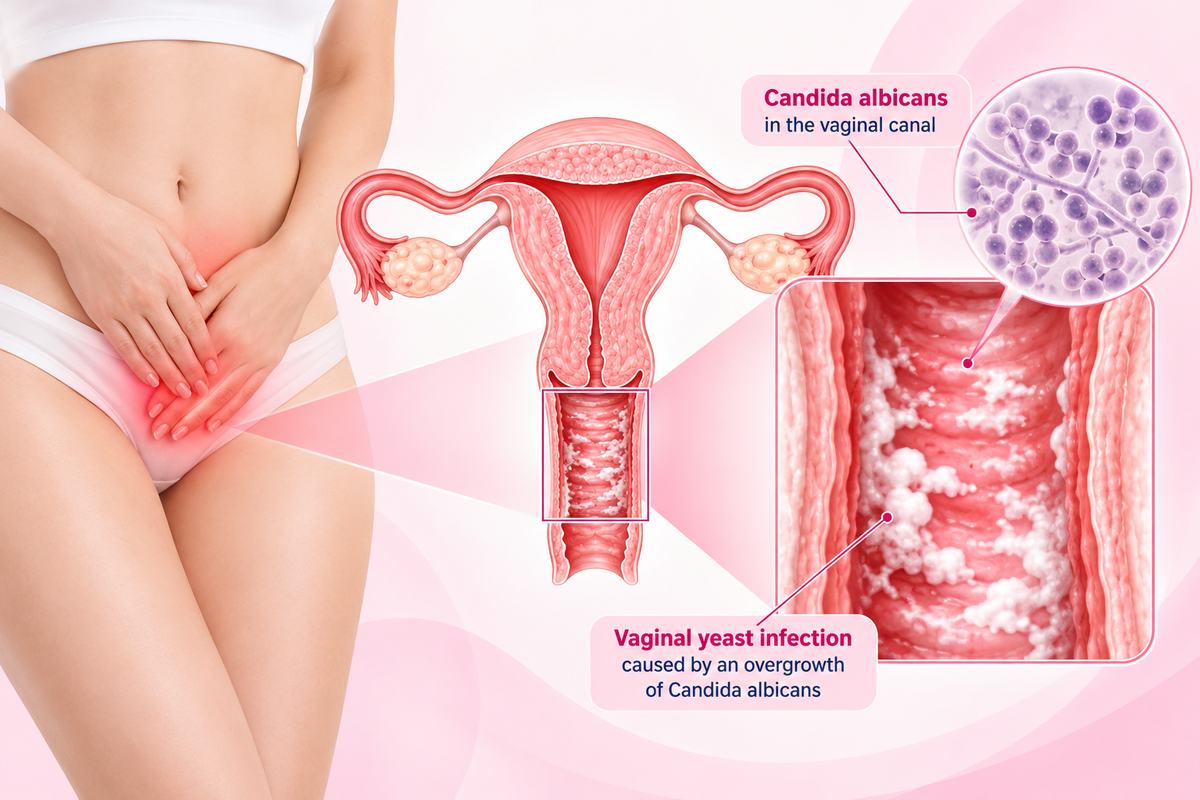
Your vagina is home to a small, harmless amount of yeast called Candida. It lives alongside friendly bacteria, mainly lactobacilli, that keep the environment slightly acidic and in balance. Think of it like a well-tended garden: as long as the good plants thrive, weeds can't take over.
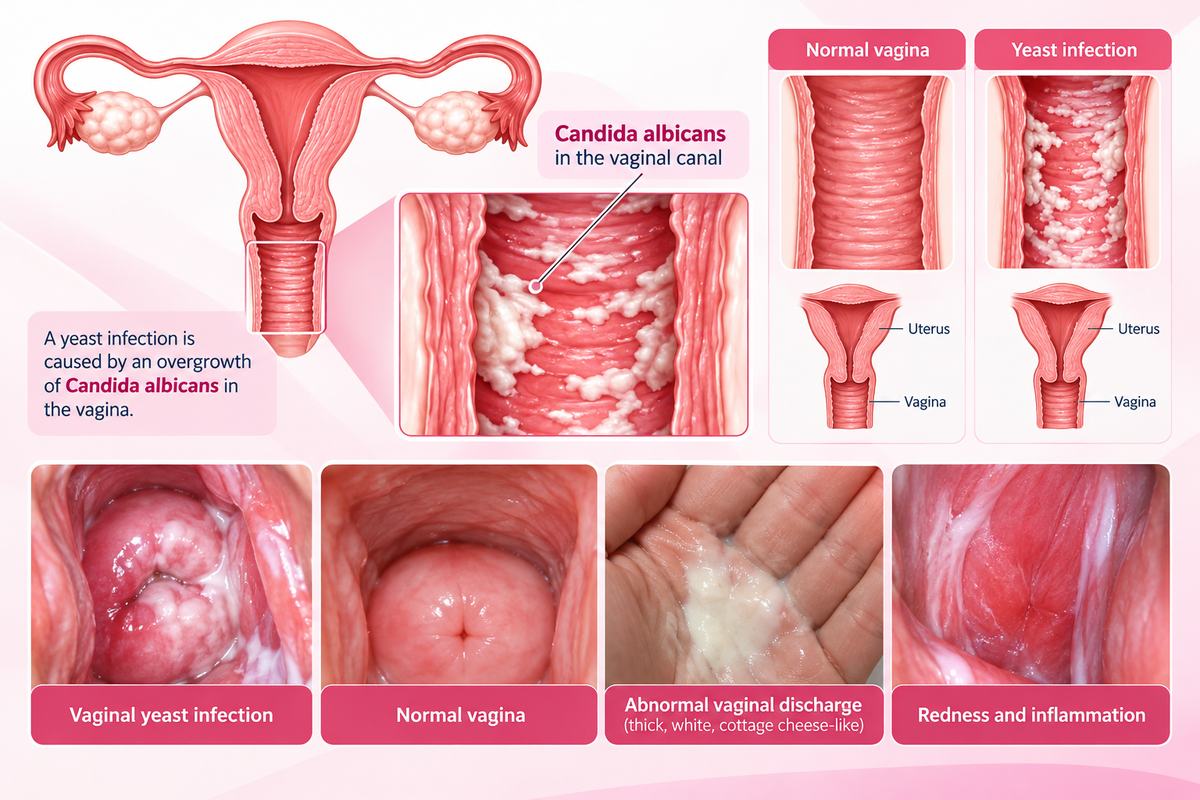
When that balance is disturbed, Candida can multiply quickly and irritate the delicate tissue of the vagina and vulva. That overgrowth is a yeast infection, also called vaginal candidiasis.
Anything that upsets the vaginal balance can open the door. Common triggers include:
A yeast infection isn't considered a sexually transmitted infection, although sex can sometimes trigger symptoms.
Symptoms range from mild to intense. You may notice:
Some women have only mild itching, while others have symptoms strong enough to disturb their sleep.
Several conditions can look similar. A strong fishy odor, for example, points more toward bacterial vaginosis (BV), while frothy yellow-green discharge can be a sign of trichomoniasis, a sexually transmitted infection. Using the wrong treatment can delay relief. Our guide to yeast infection vs. BV explains the differences in detail.
A very mild infection sometimes settles without treatment, but most need an antifungal to clear fully. Waiting it out often means days of unnecessary discomfort, and scratching can irritate the skin further. Treating early is usually the faster, kinder option for your body.
Most women feel better within a few days. If symptoms haven't cleared after finishing treatment, check back with your doctor.
If you're pregnant: always talk with your doctor or midwife first. Topical treatments are usually preferred during pregnancy, and some oral medicines aren't recommended.
Left alone or treated half-way, a yeast infection can drag on, cause painful cracks in the skin and make sex uncomfortable. Repeated infections can also wear down your confidence and your quality of life. Getting the right diagnosis and finishing treatment helps you feel like yourself again sooner.
Frequent infections can sometimes be linked to other factors, such as blood sugar. Read more in our article on recurring vaginal infections.
Treatment clears the infection, and everyday care helps your body stay comfortable. Alongside the habits above and your doctor's advice, some women choose AGO Eva. It supports blood nourishment and menstrual regulation, helps improve female hormone balance, and helps reduce the risk of menstrual disorders, period pain and abnormal discharge, as part of a broader care routine. It does not replace medical treatment.
Message AGO Fertility Care and share what you've been experiencing. We'll listen and suggest a personalized feminine care routine to go alongside your doctor's advice.
Chat With AGO on WhatsApp