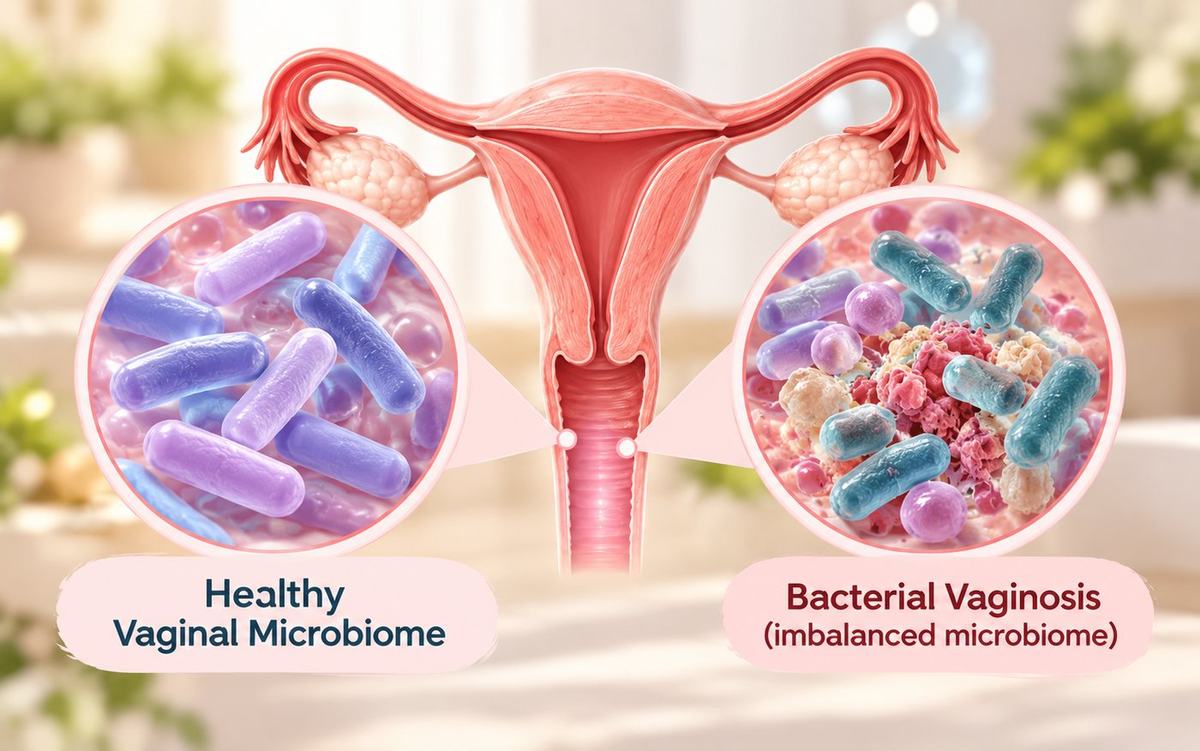
Bacterial vaginosis (BV) happens when the normal balance of bacteria in the vagina shifts, letting certain bacteria overgrow. It often causes thin gray or white discharge with a fishy smell. BV is usually treated with prescription antibiotics for bacterial vaginosis, such as metronidazole or clindamycin. It can come back, so prevention habits matter.
If you've noticed an unusual smell or a change in discharge, you're far from alone. BV is the most common vaginal condition in women of reproductive age, and it's easy to treat once you know what it is. It's also not a sign that you did something wrong. Here's what causes it, how it's usually treated, and how to lower the chance of it returning.
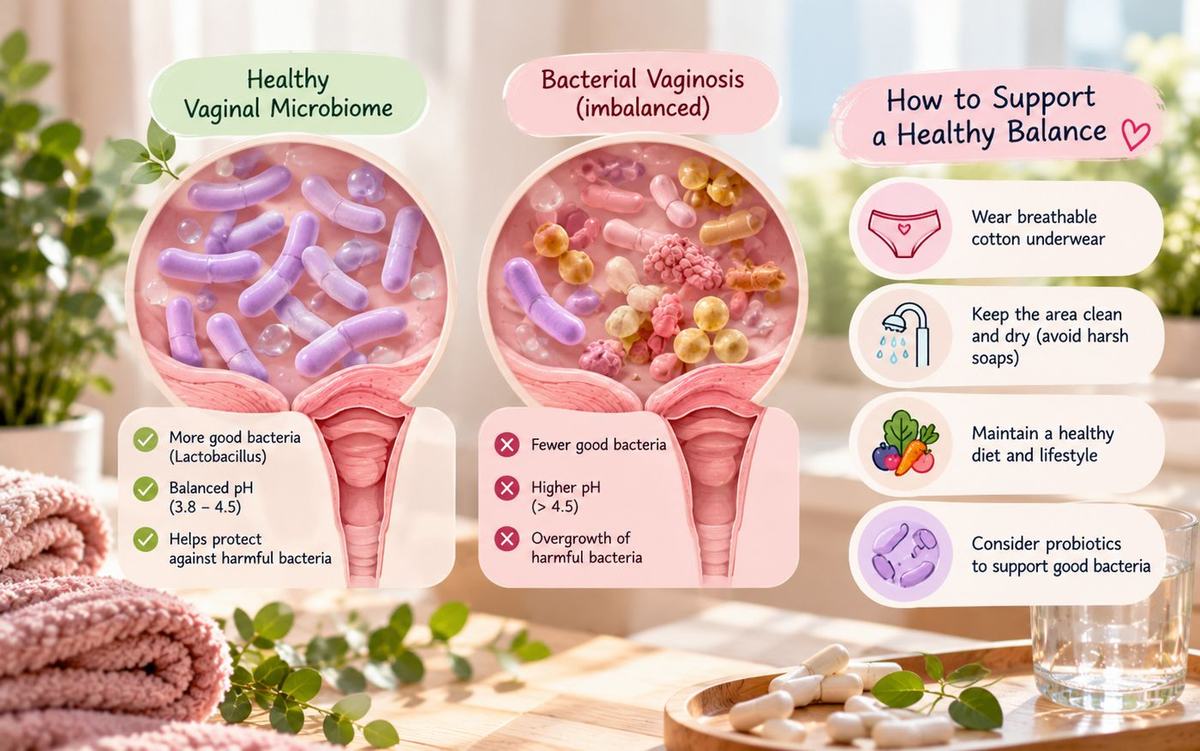
A healthy vagina is home to many bacteria. Most are "good" bacteria called lactobacilli, which keep the environment slightly acidic and protect against infection. In BV, the number of lactobacilli drops and other bacteria, such as Gardnerella, grow in their place. BV is not caused by poor hygiene, and it's not a sexually transmitted infection, although sex can make it more likely.
Many women with BV have no symptoms at all. Because BV and yeast infections can feel similar, it helps to know the difference. Read Yeast Infection vs. Bacterial Vaginosis, or see our guide to discharge colors and textures.
A healthcare provider can usually diagnose BV during a quick visit. They may look at your discharge, check its pH (BV makes the vagina less acidic), and examine a small sample under a microscope or send it for testing. Diagnosis matters because BV, yeast infections and some sexually transmitted infections can look alike but need different treatment. If you've self-treated before without success, a proper test is the best next step.
BV is treated with prescription antibiotics for bacterial vaginosis. A healthcare provider may prescribe:
A few tips that help treatment work well:
Most women feel better within a few days of starting treatment. A follow-up test usually isn't needed if your symptoms clear, unless you're pregnant or your symptoms return. If discharge or odor comes back after your course ends, book another visit rather than reusing leftover medication, so your provider can confirm what's going on and adjust the plan.
If you're pregnant or trying to conceive, talk to your provider about BV symptoms promptly. BV during pregnancy has been linked to a higher risk of early delivery, and it can be treated safely.
A healthy vaginal environment is part of a healthy reproductive foundation. Untreated BV can make it easier for other infections to take hold, including some that affect the cervix and upper reproductive tract. If you're trying to conceive and notice symptoms, getting checked and treated early is a simple step that supports your overall reproductive health. It can also help to talk with your partner about it openly. BV is common and nothing to feel embarrassed about, and preparing for pregnancy goes more smoothly when you both understand what's happening.
BV often returns, sometimes within a few months of treatment. Antibiotics clear the overgrowth, but they don't always restore the good bacteria. If BV keeps coming back, your provider may suggest a longer treatment plan. Learn more in Recurring Yeast Infections and BV.
Because BV is linked to low levels of lactobacilli, researchers are studying whether probiotics can help restore balance and reduce recurrence. Early results are promising for some strains, but probiotics are not a replacement for antibiotics when you have an active infection. If you're curious, ask your provider whether a probiotic makes sense for you after treatment.
Most cases of BV are mild, but some symptoms need prompt attention. Contact a healthcare provider soon if:
Getting the right diagnosis the first time saves you weeks of discomfort and repeated treatments that may not work.
Some women also look for ways to support their intimate health from the inside. AGO Eva is formulated to help support gynecologic wellness and everyday comfort as part of a broader care routine, alongside the treatment your provider recommends.
Message AGO Fertility Care and tell us what you've tried so far. We'll help you understand possible next steps and a gentle care routine.
Chat With AGO on WhatsApp