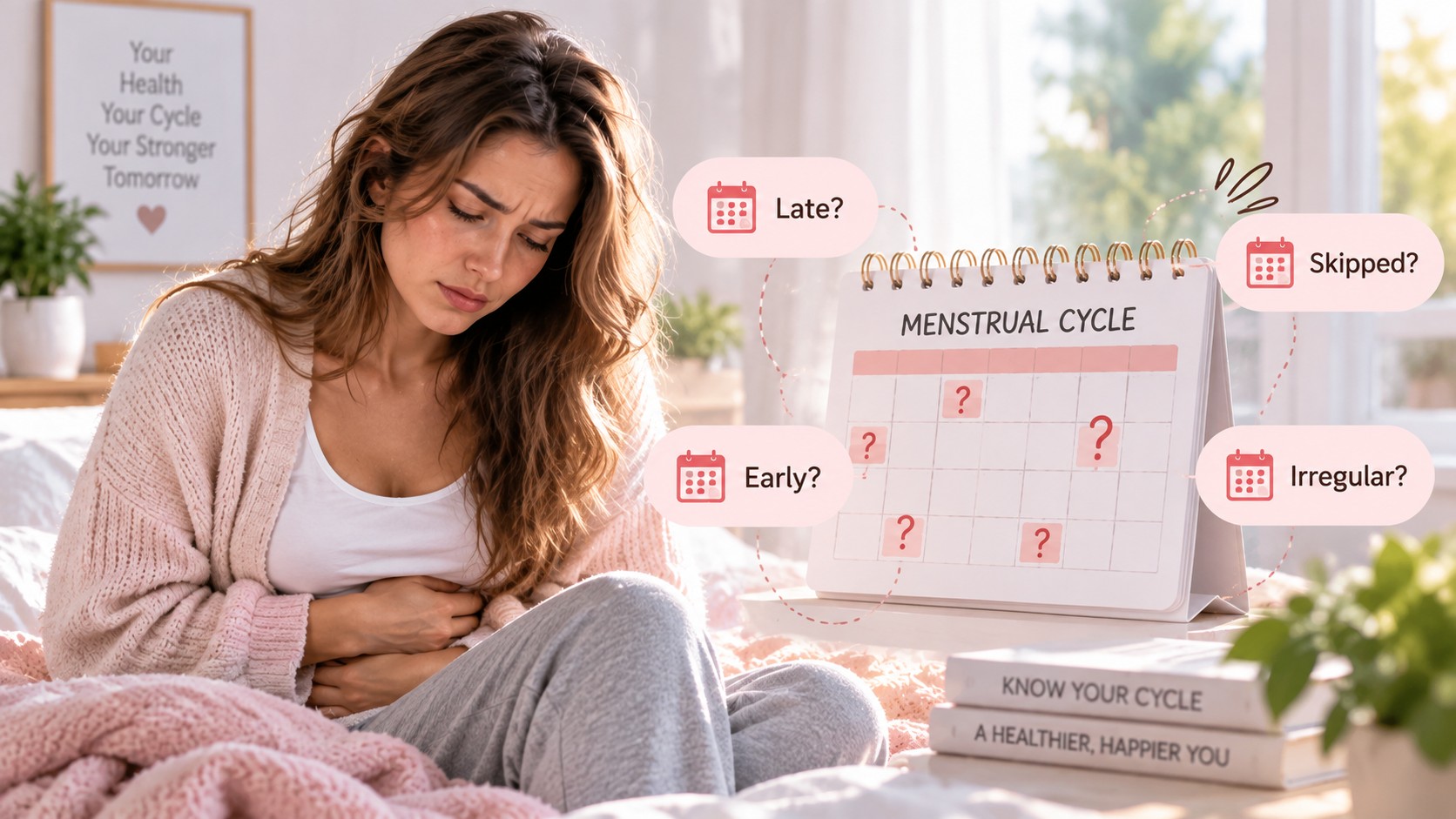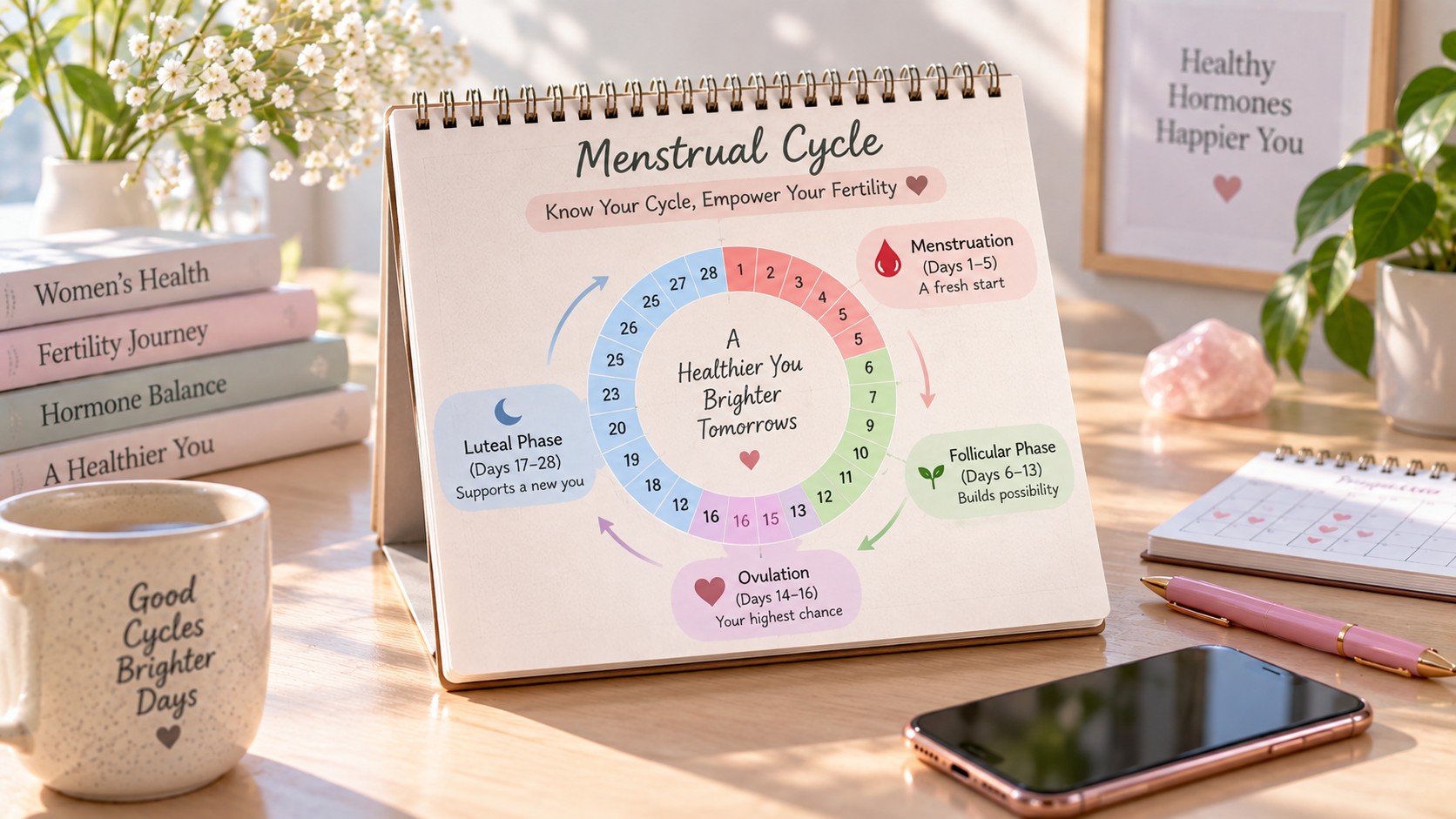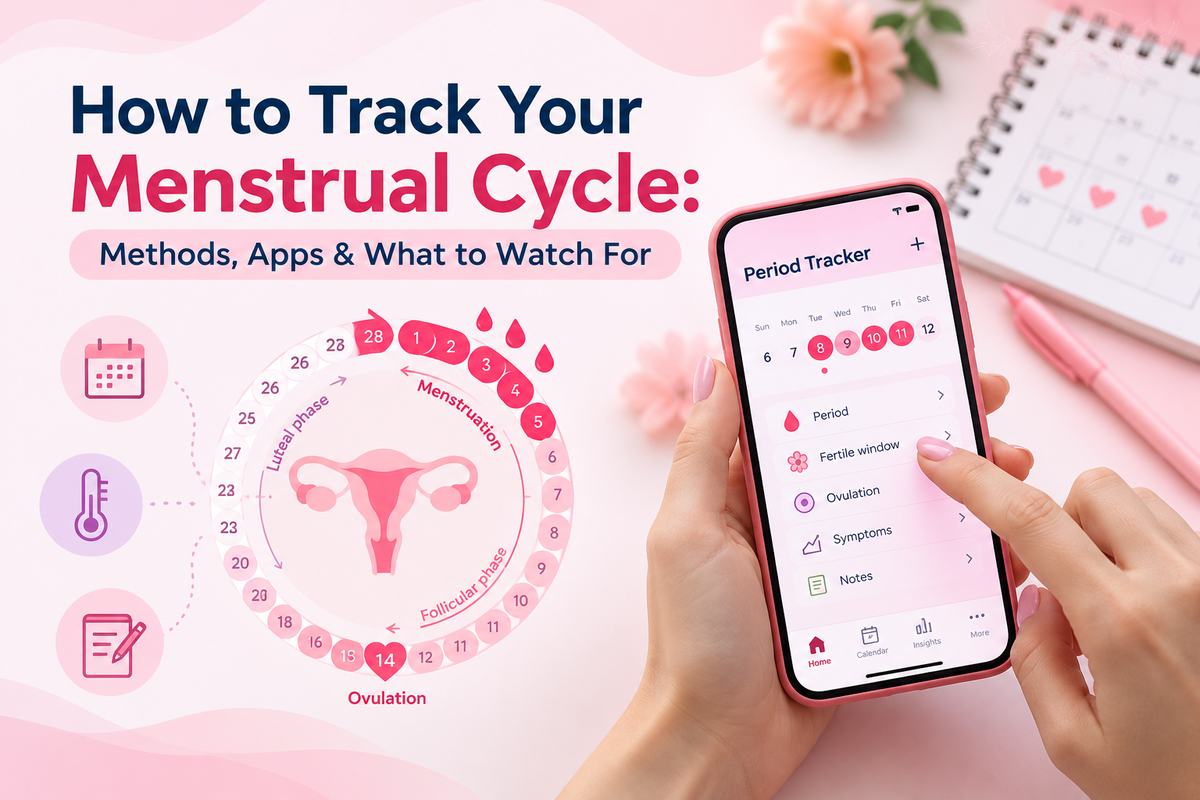
Tracking your period helps you stay on top of your reproductive health, predict when your next period will arrive and know when you are likely to ovulate. To track your menstrual cycle, write down the first day of every period and count the days until the next one begins. After three months, a period tracker app or a simple calendar will show your average cycle length, how long your periods last and roughly when your fertile days fall.
Think of your cycle as a monthly message from your hormones. When it arrives on time, it's quietly telling you that things are running smoothly. When it shifts, it's often the first sign that something, from stress to sleep to an underlying condition, deserves a little attention. Learning to read that message takes only a few seconds a day.
Many women count their cycle from the last day of bleeding, or count only the days they're on their period. Both give the wrong number.
Your cycle actually starts on day one of your period, meaning the first day of real flow, not light spotting. It ends on the day before your next period starts. Everything in between, including the days you're not bleeding, belongs to the same cycle.
Here's an example. If your period started on March 3 and your next one began on March 31, your cycle was 28 days long. If the following period started on April 29, that cycle was 29 days. A difference of a day or two like this is completely normal.
Ovulation usually happens about 14 days before your next period, not 14 days after your last one. A simple way to estimate it is to subtract 14 from your average cycle length:
Your fertile window is the five days before ovulation plus the day itself, because sperm can survive for several days while the egg lives for about a day. This is only an estimate, and it's less reliable if your cycles vary. Body signs and ovulation tests can sharpen the picture. Our guide to menstrual cycle phases and fertility explains each stage in more detail.
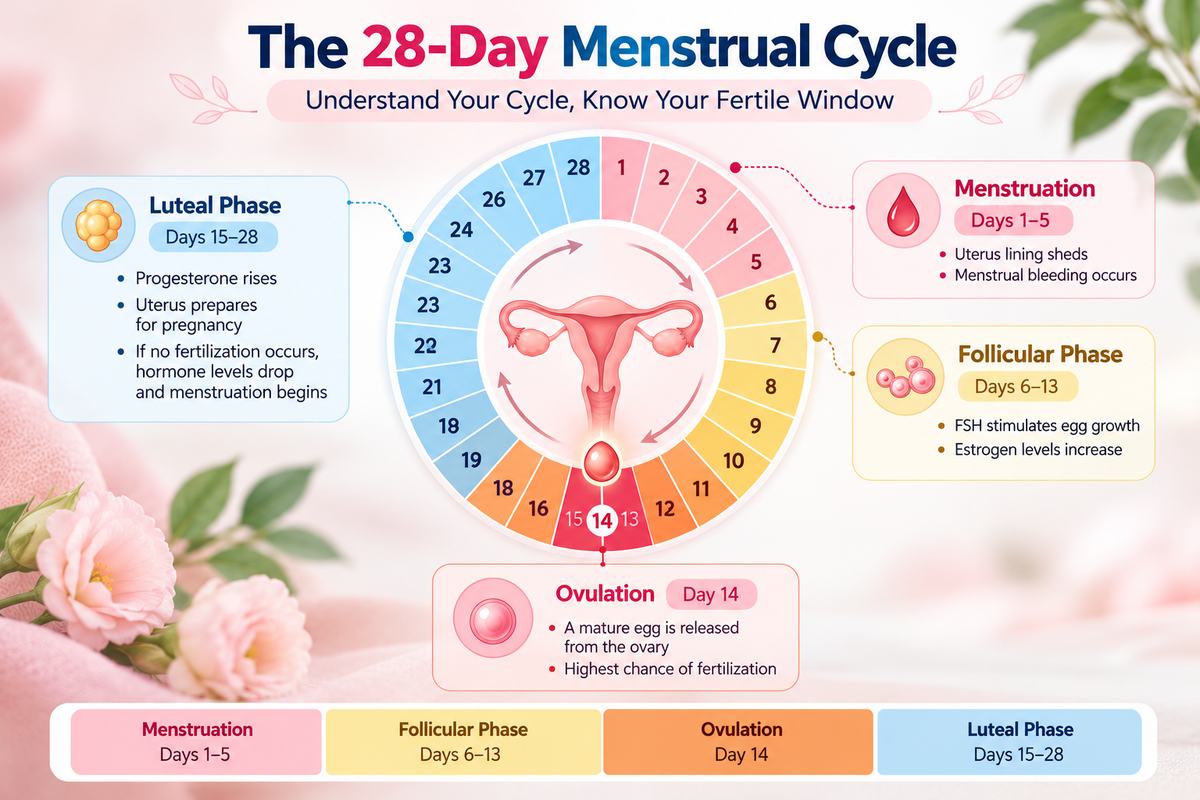
Knowing the normal range helps you relax about small changes and notice the bigger ones:
There's no single right method. The best one is the one you'll keep up with.
When choosing an app, check how it stores and shares your data, and pick one that lets you control or delete your information.
Even a very regular cycle can change from time to time. Common reasons include stress, big changes in weight or exercise, travel across time zones, illness, poor sleep and stopping hormonal birth control. Conditions such as thyroid problems or PCOS can also cause longer or less predictable cycles. If your cycles have been unpredictable for a while, our article on irregular periods and hormone balance may help.
Talk with a healthcare provider if you notice:
Bring your tracker. A few months of notes can help your provider understand what's going on much faster. If you're trying to conceive, share the calendar with your partner, too. Fertility is a journey for both of you.
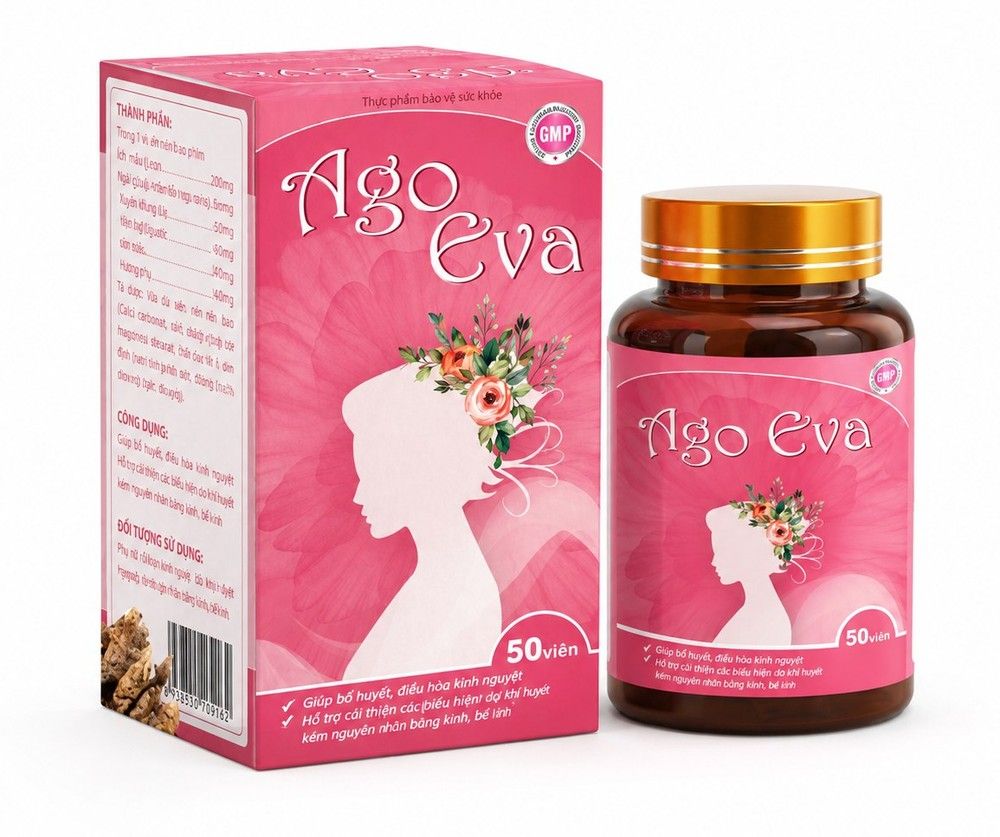
A balanced routine of regular sleep, nourishing meals, movement and stress management lays the foundation for a healthy cycle. Some women also choose targeted nutrition. AGO Eva and Mẫu Nguyệt Đà are formulated to help support menstrual-cycle regularity, hormonal balance and women's reproductive health as part of a broader care routine, alongside medical guidance when it's needed.
Message AGO Fertility Care and share what you've been tracking. We'll help you understand the pattern and suggest a personalized care routine that fits you.
Chat With AGO on WhatsApp