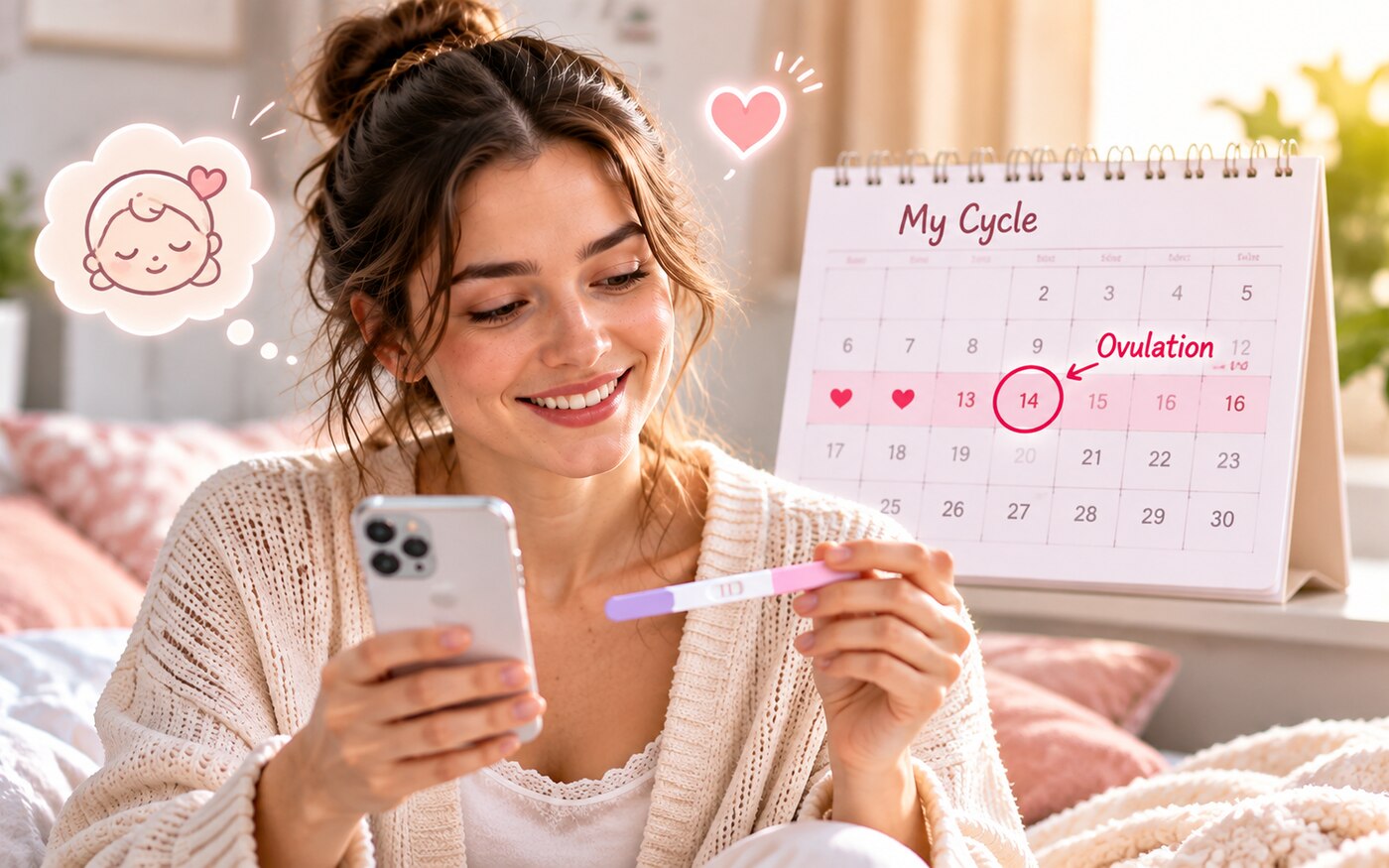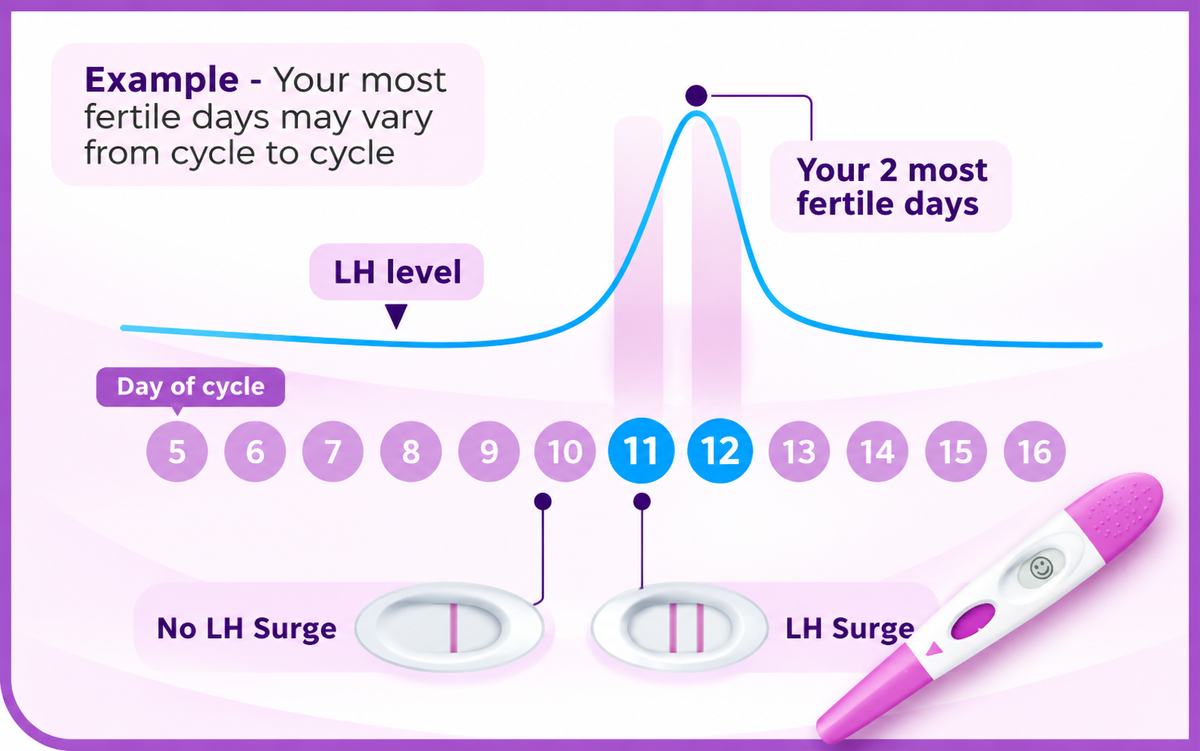
An ovulation predictor kit (OPK) is a urine test that detects a rise in luteinizing hormone (LH), the hormone that triggers your ovary to release an egg. Ovulation usually happens 24 to 36 hours after a positive result, so the day you get a positive and the following day or two are your most fertile time to have sex.
Ovulation tests are one of the simplest ways to take some guesswork out of trying to conceive. They are inexpensive, easy to use at home, and can help you see your fertile window more clearly than a calendar alone. They can also be confusing at first. Below, we walk through how they work, when to start testing, how to read the results, and what to do if your tests never seem to turn positive.
Throughout most of your cycle, your body makes a small, steady amount of LH. A day or so before ovulation, LH levels rise sharply. This is called the LH surge, and it is the signal that tells a mature follicle to release its egg.
Ovulation test kits contain antibodies that react to LH in your urine. When the level crosses a certain threshold, the test shows a positive result. Most kits come in one of three formats:
All three measure the same thing. The difference is mostly convenience and cost, so choose the one you will actually use consistently.
The goal is to start testing a few days before you expect to ovulate, so you catch the surge as it begins. Ovulation usually happens about 14 days before your next period, not 14 days after your last one. That small difference matters if your cycles are shorter or longer than 28 days.
A simple rule of thumb is to subtract 17 from your usual cycle length and start testing on that cycle day. For example:
If your cycles vary from month to month, use your shortest recent cycle to choose your start day. You can also use our ovulation calculator to estimate your window before you begin.
Small details can change your results. These habits help make each test more reliable:
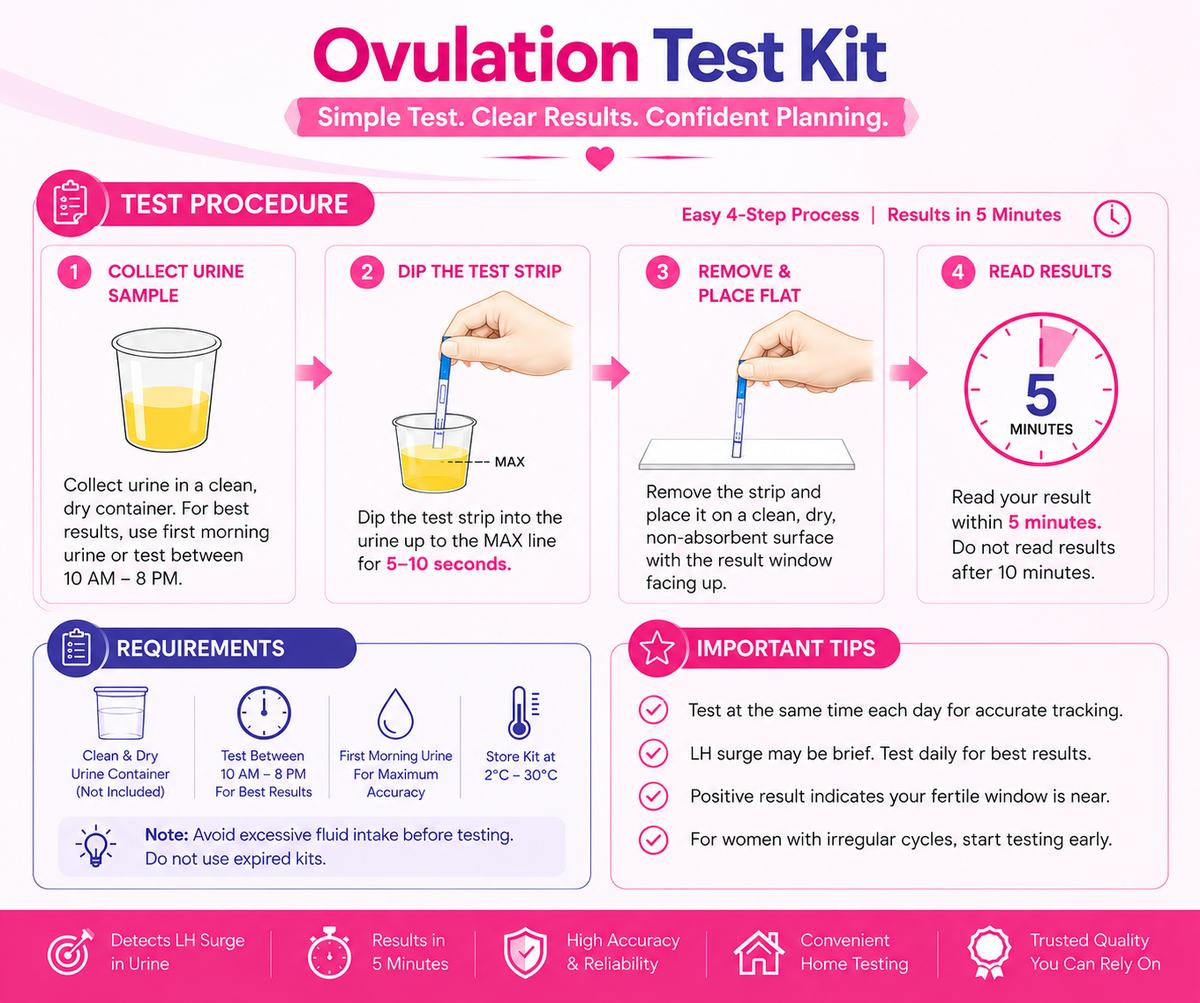
With digital tests, the answer is shown clearly on the screen. With strips and midstream tests, you compare two lines: the control line, which shows the test worked, and the test line, which reacts to LH.
This is an important difference from pregnancy tests, where any visible second line counts. With ovulation tests, a faint line is still a negative.
A positive test means ovulation is likely within the next day or so. Your most fertile days are the day of the positive and the following day. Sperm can survive in the reproductive tract for up to five days, so having sex in the days just before the surge also counts.
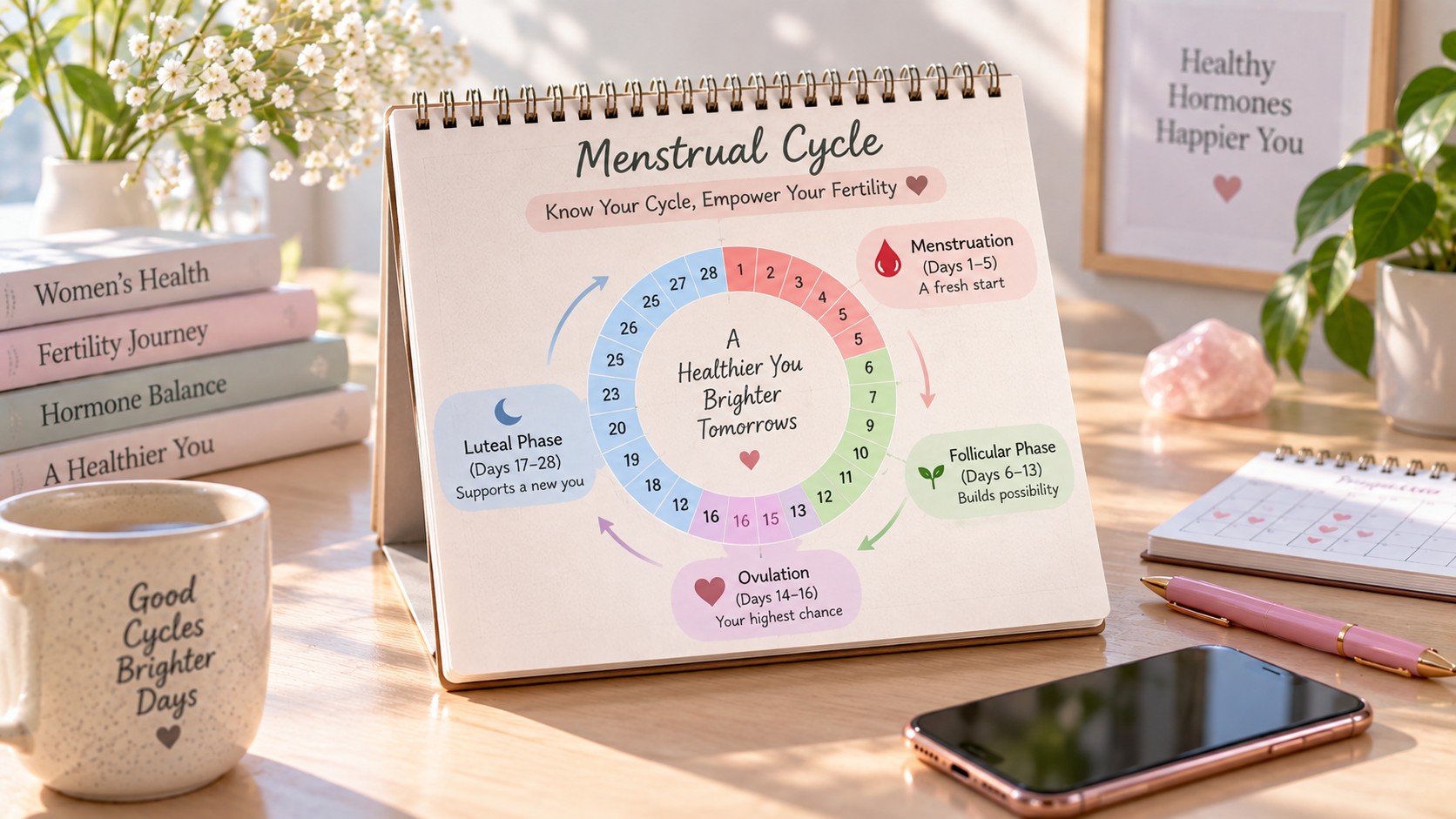
Many couples aim for sex every day or every other day from a few days before the expected surge until the day after a positive result. There is no need to time it to the hour. Relaxed, regular intimacy across the window works well and keeps the process from feeling like a chore for either of you. If you'd like to understand where this window sits in your cycle as a whole, our guide to menstrual cycle phases and fertility explains it step by step.
Ovulation tests are accurate at detecting LH, but LH doesn't always tell the full story. Results may be harder to interpret if:
A positive test also doesn't prove that an egg was released. It shows the hormonal signal happened. If you want extra reassurance, tracking basal body temperature or cervical mucus alongside OPKs can help confirm the pattern over a few cycles.
It's a good idea to check in with a healthcare provider if:
A provider may suggest blood tests to check hormone levels and confirm ovulation, or an ultrasound to look at your ovaries. Remember that fertility involves both partners. A semen analysis is a simple, early step that can give you a fuller picture so neither of you carries the uncertainty alone.
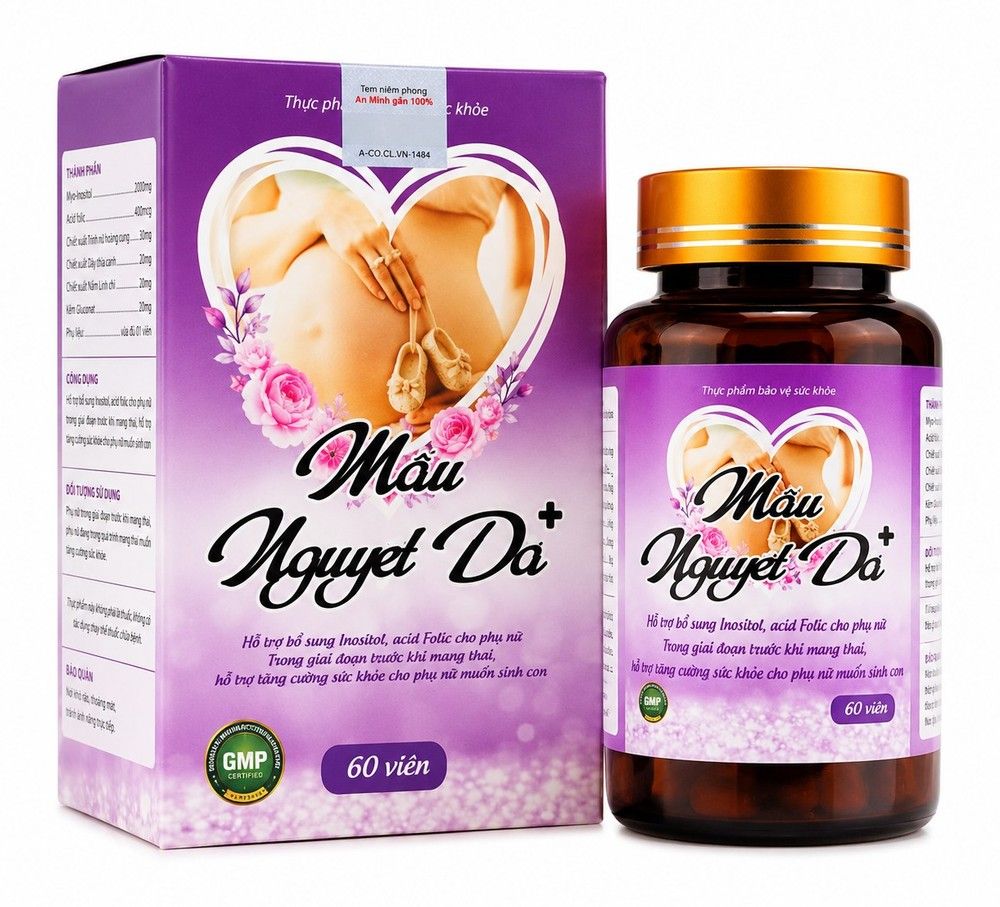
Testing tells you when, but your overall health shapes what happens in each cycle. Steady sleep, balanced meals rich in folate, managing stress and moving your body regularly all support healthy ovulation. Some couples also add targeted nutrition. AGO Mom and Mẫu Nguyệt Đà+ are formulated to help support hormonal balance and reproductive wellness as part of a broader routine, alongside medical guidance when it's needed.
Message AGO Fertility Care with your cycle details and test photos. We'll help you read the pattern and suggest a personalized care routine for your journey.
Chat With AGO on WhatsApp