Message Us for Advice
← Back to Blog Hormones

Can You Get Pregnant Naturally With PCOS?

September 19, 2026 · 4,069 views
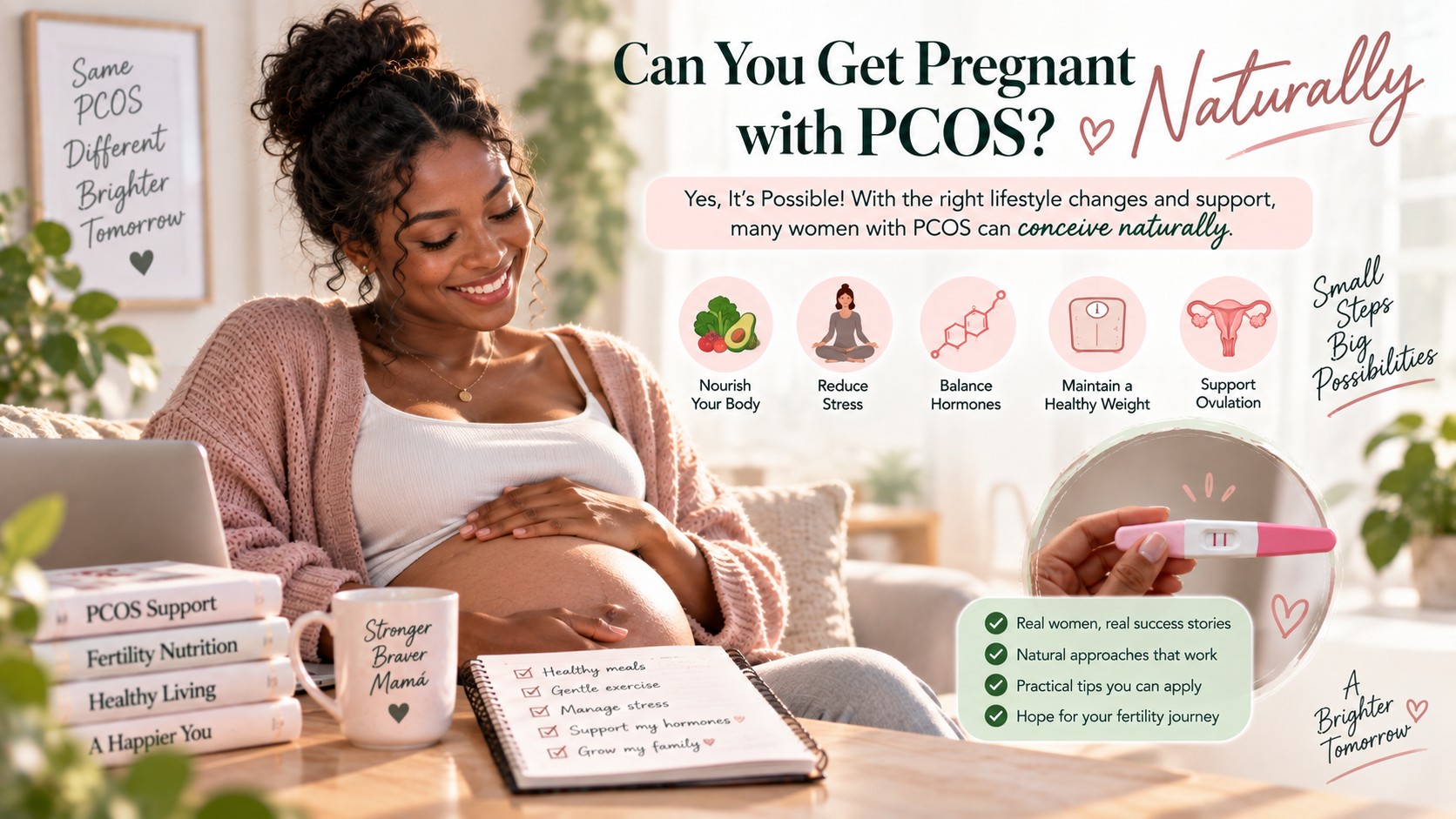
Pregnant woman smiling, with icons for nourishing the body, reducing stress, and supporting ovulation with PCOS

If you've been told you have PCOS, one question probably matters more than any other: can I still get pregnant naturally? The honest, reassuring answer is yes — for many women, natural conception with PCOS is entirely possible, though the path there sometimes takes patience and the right support.

Why PCOS can make conception take longer

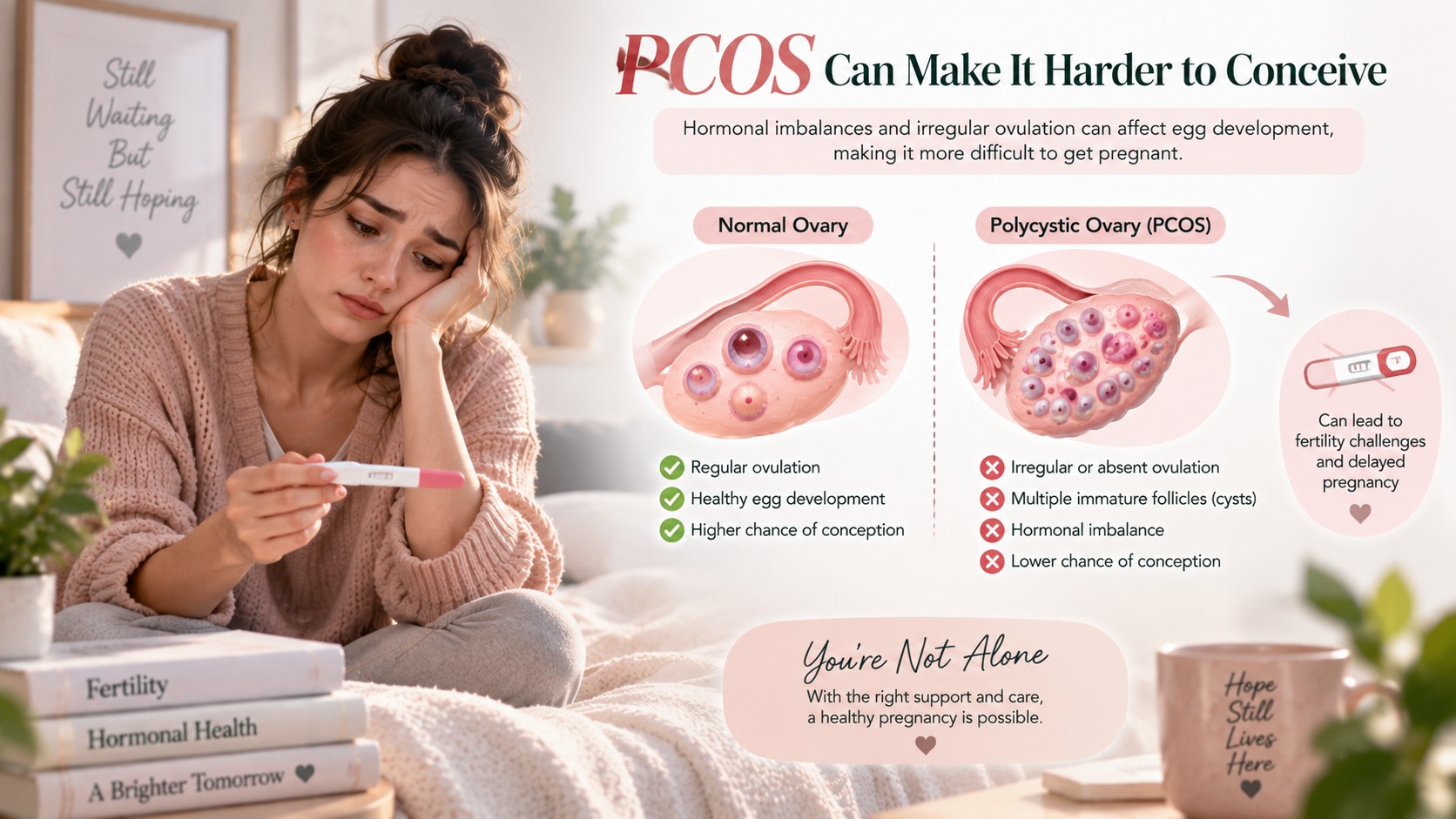
As explored in our article on PCOS and irregular ovulation, the core fertility challenge in PCOS is that ovulation happens less often or less predictably. Since conception can only occur around ovulation, fewer ovulatory cycles each year mean fewer opportunities to conceive — not zero, but fewer.

What actually affects your chances

How often you ovulate

Some women with PCOS ovulate occasionally on their own; others need support to ovulate more consistently. Identifying your own pattern through tracking is a useful first step.

Age

As with any woman trying to conceive, age affects egg quantity and quality, so it's a relevant factor alongside PCOS itself.

Insulin resistance and weight

Because insulin resistance is closely tied to ovulation problems in PCOS, supporting insulin sensitivity is one of the more impactful, evidence-informed levers many women have some control over.

Other fertility factors

PCOS doesn't rule out the possibility of other, unrelated fertility factors (such as the male partner's fertility) also being part of the picture, which is why a full evaluation as a couple is often recommended if conception hasn't happened after several months of trying.
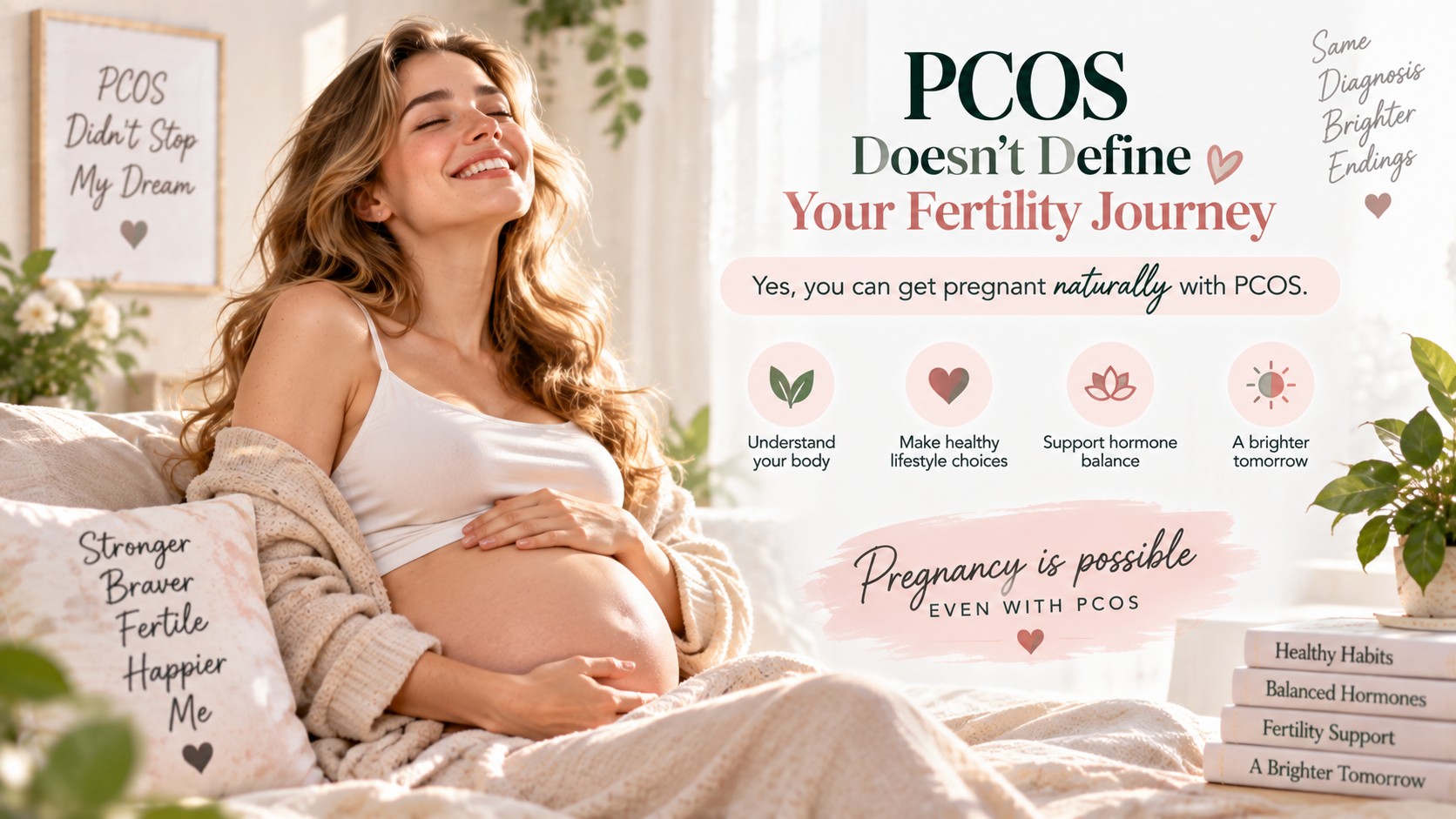
Pregnant woman resting peacefully, representing hope that pregnancy is possible with PCOS

How to time sex when your cycle is irregular

Calendar apps assume a regular cycle, so they often guess wrong when you have PCOS. Instead, watch your own body for signs that ovulation is near. These steps can help you find your fertile window with less stress.

  1. Watch your cervical mucus. When it turns clear, slippery and stretchy, like raw egg white, ovulation is likely close.
  2. Use ovulation tests with care. Some women with PCOS have high LH (the hormone these tests measure) much of the time, so tests can show several positives in a row. Pair them with other signs rather than relying on them alone.
  3. Chart your basal body temperature. A small, steady rise after ovulation helps you confirm that it happened and learn your pattern over time.
  4. Have sex every two to three days. If you can't pinpoint ovulation, regular sex through the month means sperm are more likely to be there when an egg is released.

Our guide to cycle phases and the fertile window explains these signs in more depth.

Myths vs facts about PCOS and pregnancy

Preparing your body before pregnancy

With PCOS, it's worth getting a little ahead of things. PCOS is linked with a higher chance of gestational diabetes and high blood pressure in pregnancy, so a preconception check-up is a kind thing to do for yourself. Your provider may check your blood sugar, blood pressure and thyroid. The CDC also recommends that anyone who could become pregnant take a daily vitamin with folic acid, which you can read about in our folic acid guide. Ask your partner to look after his health too, since sperm quality is half of the picture.

Questions to ask your provider

Steps that may help support natural conception

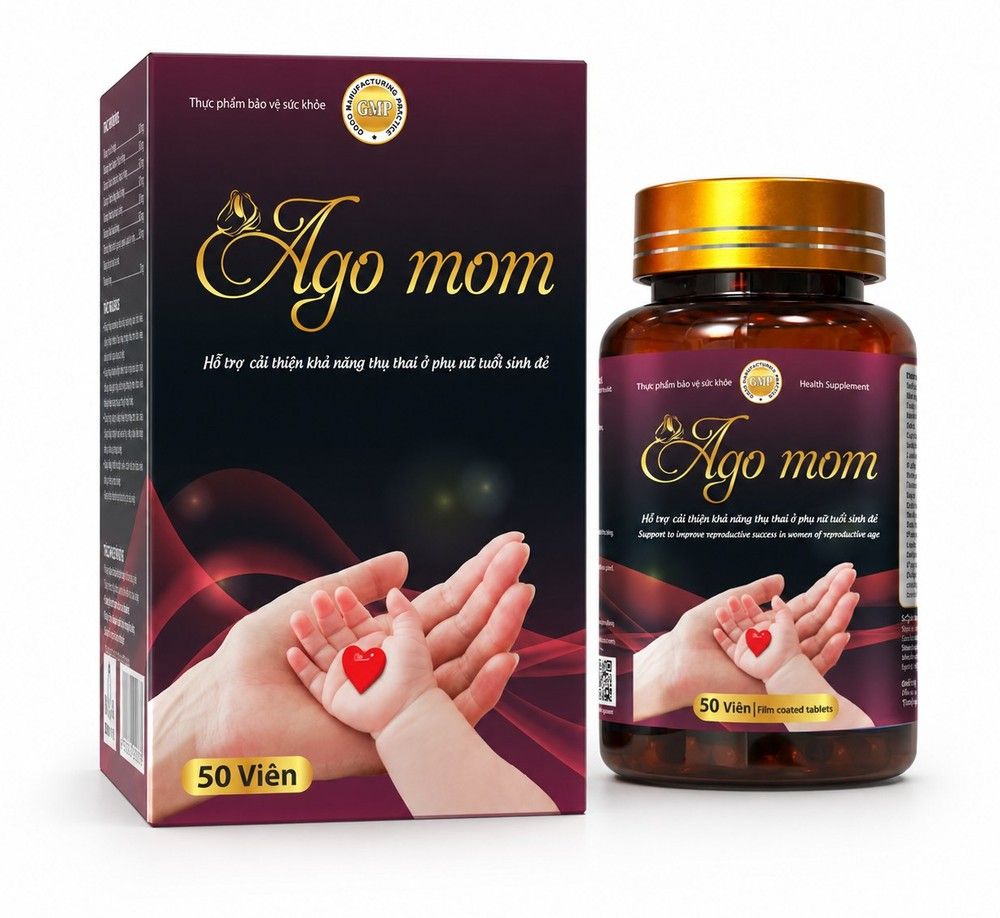
AGO Mom is formulated for women preparing for pregnancy, including those managing PCOS, to help support hormonal balance and reproductive wellness as part of a broader preconception care routine. It is meant to be used alongside medical guidance, not in place of it.

A note on hope and patience

A PCOS diagnosis can feel overwhelming, especially when you're eager to grow your family. It helps to remember that PCOS is a common, manageable hormonal pattern — not a verdict on your ability to become a mother. Many women with PCOS go on to have healthy pregnancies, sometimes naturally and sometimes with additional support along the way. Either path is a valid one.

Navigating PCOS while trying to conceive?

Message AGO Fertility Care and share your PCOS history, cycle pattern, and how long you've been trying. Our team can help you understand supportive next steps and a personalized care routine.

Chat With AGO on WhatsApp

FAQ

Frequently Asked Questions

Can you get pregnant naturally with PCOS?
Yes, many women with PCOS conceive naturally, though it may take longer than average due to irregular ovulation. Supportive lifestyle changes and, when needed, medical treatment can help improve the chances of natural conception.
How long does it typically take to conceive with PCOS?
This varies widely depending on how often ovulation occurs and other individual factors. Some women conceive within several months of tracking ovulation and supporting their cycle, while others benefit from a longer timeline or additional medical support.
What can help improve fertility chances with PCOS?
Supporting insulin sensitivity through diet and exercise, tracking ovulation with reliable methods, managing stress, and working with a healthcare professional on any needed medical treatment are all commonly discussed approaches.
Do ovulation tests work if you have PCOS?
They can, but some women with PCOS have high LH levels much of the time, which may cause several positive results in a row. Pairing tests with cervical mucus changes and basal body temperature charting usually gives a clearer picture.
Can you ovulate with PCOS if your periods are irregular?
Yes. Many women with PCOS still ovulate, just less often or less predictably. Ovulation can happen even after a long gap between periods, which is why tracking your own signs can be helpful.
Should my partner get checked if I have PCOS?
Yes, it is often a good idea. PCOS does not rule out other factors, and male factors play a part in many cases where couples have trouble conceiving. A semen analysis is simple and can be done early.
Continue Reading

Related Articles

Explore More

AGO Products