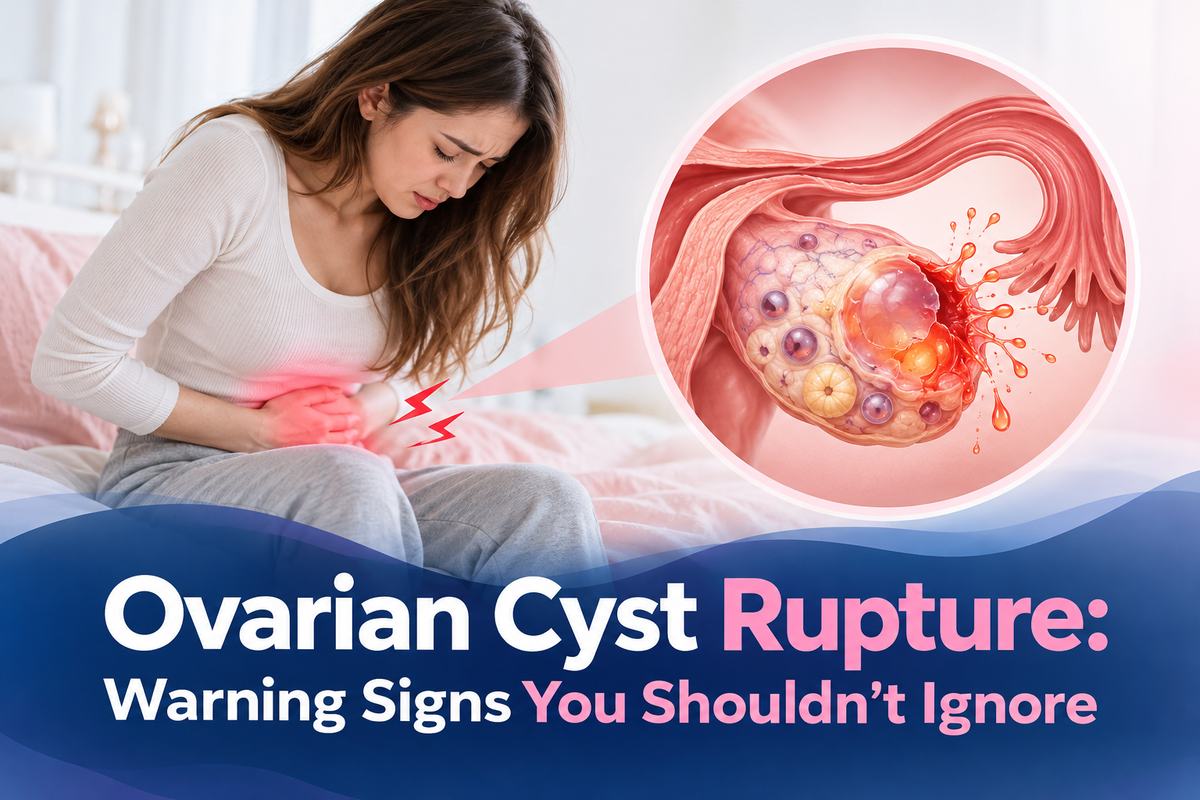
Most ruptured ovarian cysts are not dangerous and settle on their own within a few days. The most common sign is a sudden, sharp pain on one side of the lower belly, often during or right after sex or exercise. But severe pain, fever, vomiting, dizziness or fainting can mean internal bleeding or another emergency, so if you notice any of these, get medical care right away.
Ovarian cysts are extremely common, and many women have one without ever knowing it. Occasionally, though, a cyst breaks open. Knowing what that can feel like, and which signs mean "go now," helps you act quickly and with less fear.
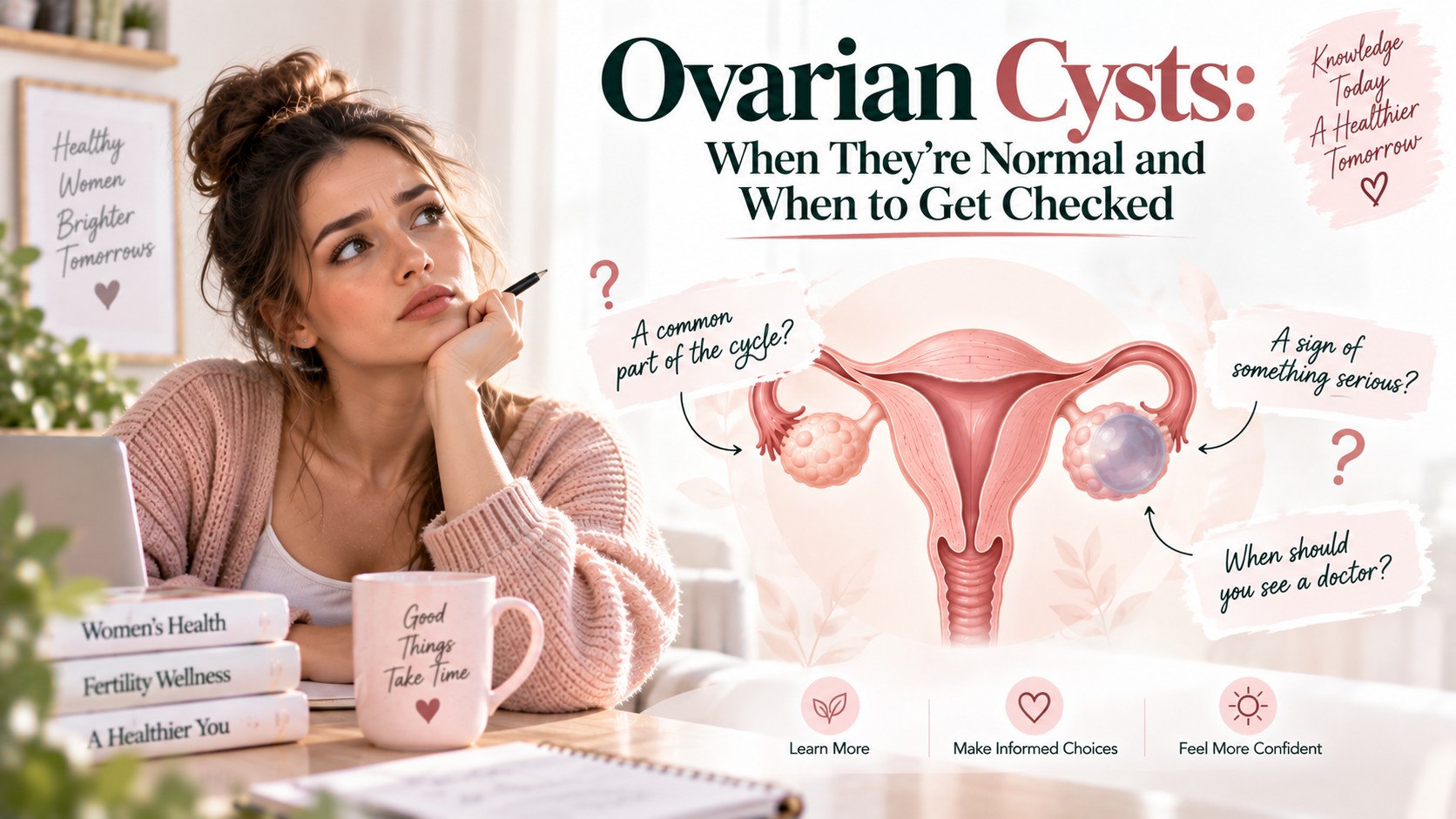
An ovarian cyst is a small, fluid-filled sac on or inside an ovary. The most common kind, a functional cyst, forms as part of normal ovulation and usually fades within a few cycles.
When a cyst ruptures, the fluid inside spills into the pelvis and irritates the lining of the abdomen, which causes pain. Sometimes a small blood vessel in the cyst wall breaks too, leading to bleeding. Most ruptures involve only a little fluid and heal without treatment. For a broader look at cyst types and everyday symptoms, read our guide to ovarian cyst symptoms.
Strenuous exercise, sex or a direct blow to the abdomen can sometimes set off a rupture, but it can also happen with no obvious trigger.
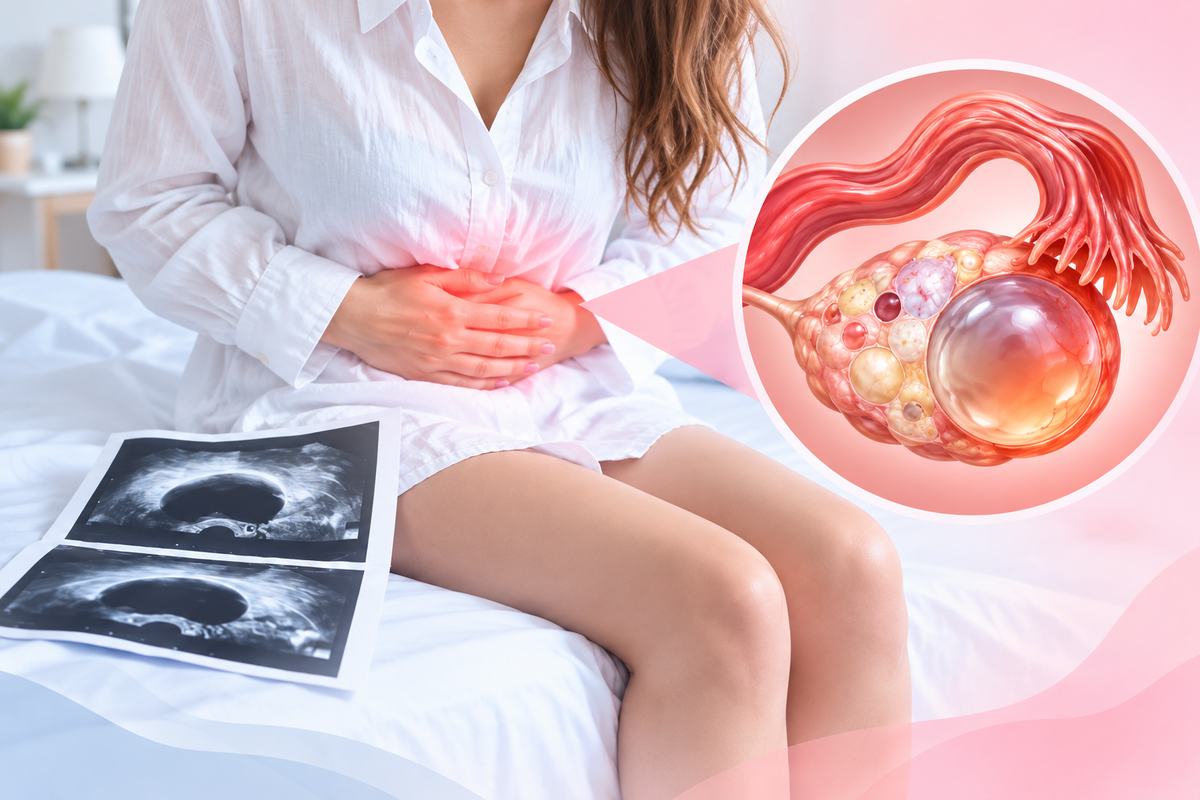
Get urgent medical care, or call emergency services, if you have pelvic pain with any of these:
These can be signs of significant internal bleeding or infection, or of other emergencies with similar pain, such as ovarian torsion (when an ovary twists and cuts off its own blood supply), appendicitis or an ectopic pregnancy. If there's any chance you could be pregnant, tell the medical team right away.
Usually not. Most ruptures cause pain that eases within a few days. A rupture becomes serious when there's heavy bleeding, infection, or when the pain is really caused by something else, like torsion. That's why getting checked matters, even if the pain is starting to fade.
If your pain is mild and a medical professional has said it's safe to rest at home:
If the pain gets stronger, or any emergency sign appears, don't wait. Seek urgent care.
Your doctor may suggest a follow-up ultrasound to make sure everything has settled.
Not every rupture can be prevented. If you've had painful cysts before, your doctor may discuss hormonal birth control, which reduces ovulation and therefore new functional cysts. If you're trying to conceive, ask about options that fit your plans. Regular check-ups help track any cyst that is large or doesn't go away.
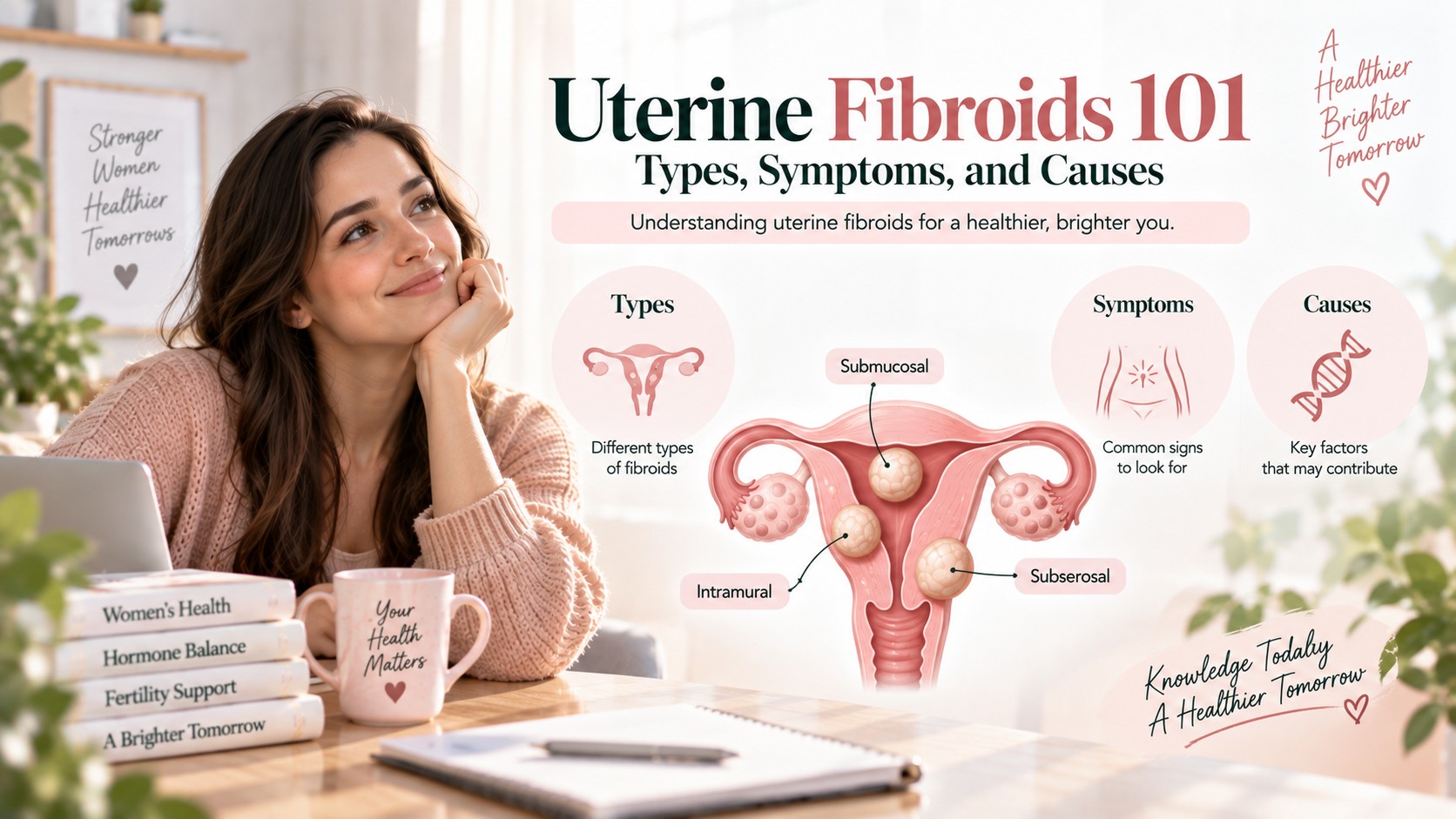
For most women, a single ruptured functional cyst does not affect future fertility. If you've needed surgery, or your cysts are linked to endometriosis or PCOS, talk with your doctor about what it means for you. Our guide to uterine fibroids may also help if you're managing more than one condition.
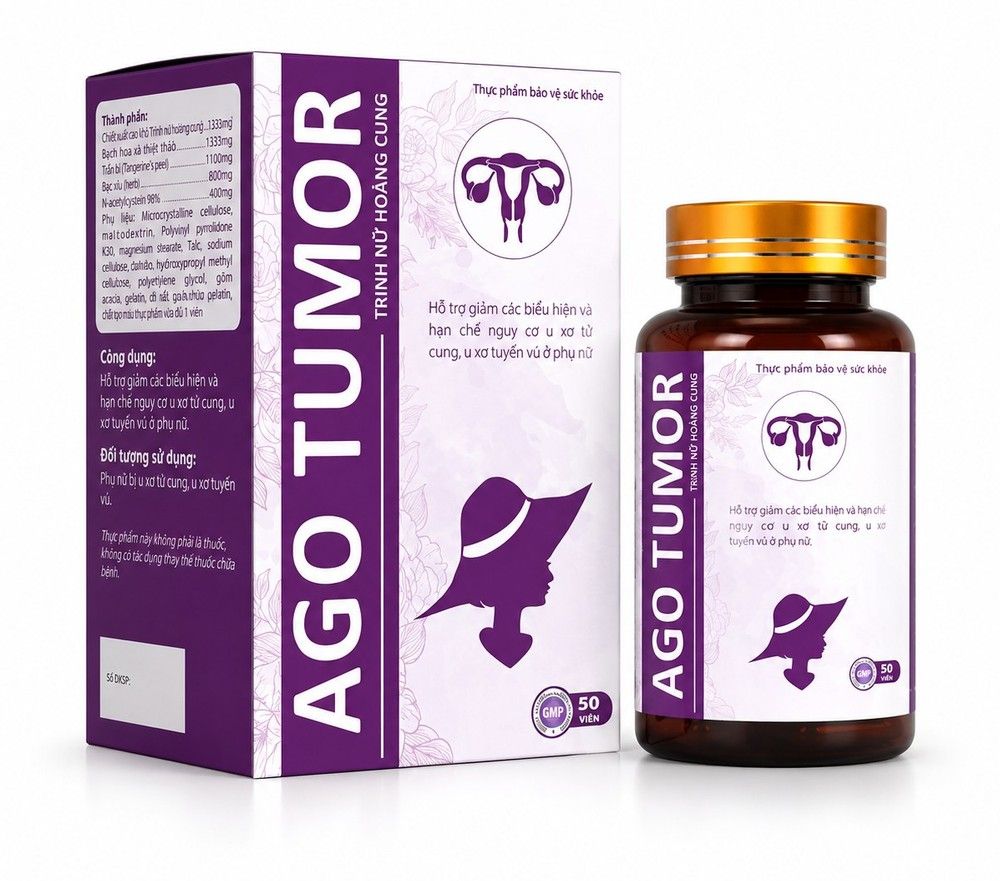
Recovery is a time to rest and be gentle with your body. Once your doctor has checked you and any urgent issue is treated, a steady routine of good sleep, balanced meals and stress care can help you feel more like yourself. AGO Tumor is a supplement for women with uterine fibroids, ovarian cysts or benign breast lumps. It is formulated to help ease related symptoms and help reduce the risk of uterine fibroids and breast fibroids, as part of a broader care routine. It does not replace medical diagnosis or treatment.
Message AGO Fertility Care to talk through your situation after you've seen your doctor. We'll listen and suggest a personalized care routine to support your recovery.
Chat With AGO on WhatsApp