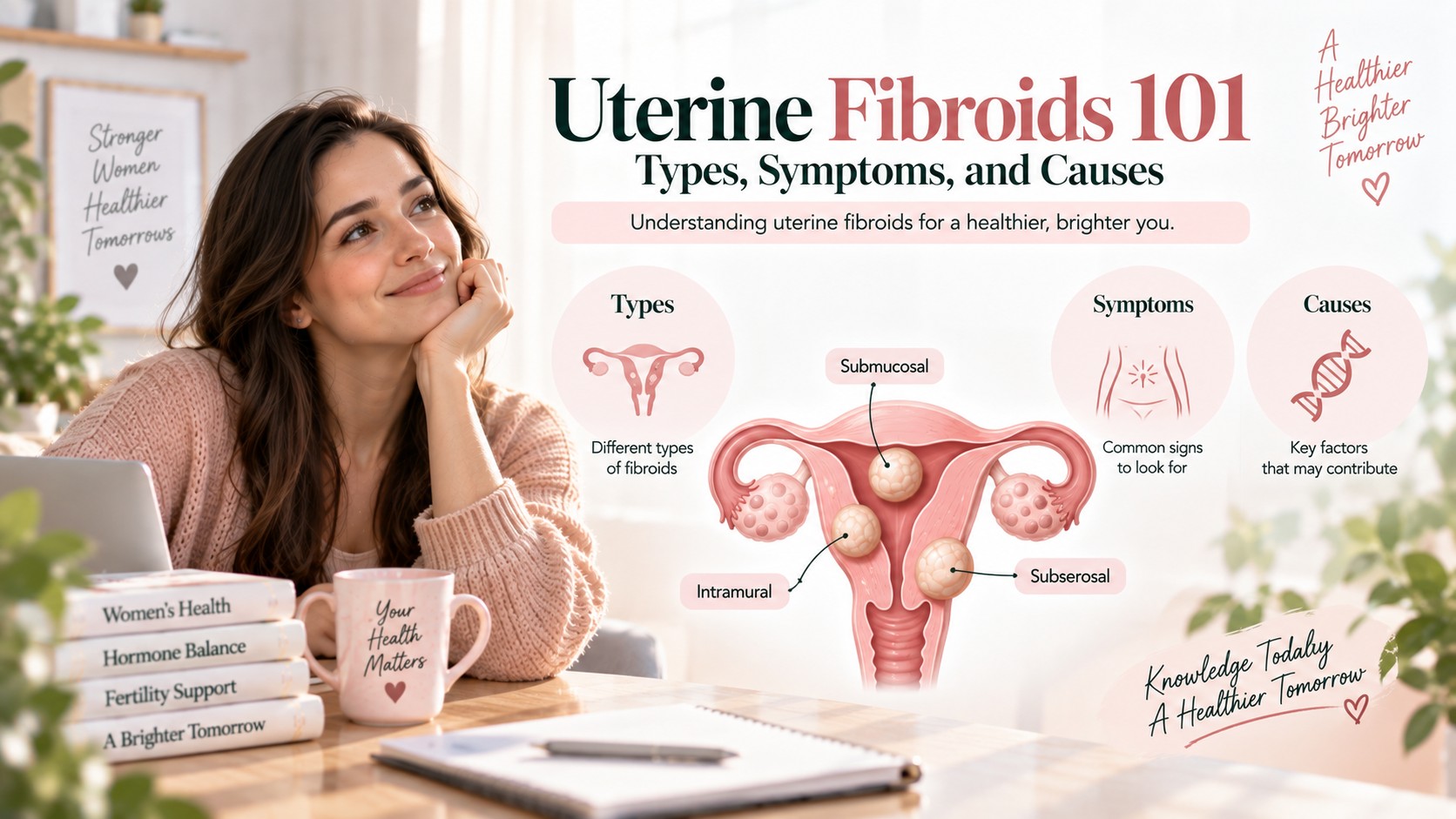
Uterine fibroids are one of the most common gynecologic conditions, affecting a large share of women at some point before menopause — yet many women have never had a clear explanation of what they actually are. This guide walks through the basics: what fibroids are, the different types, and what may cause them.
What are uterine fibroids?
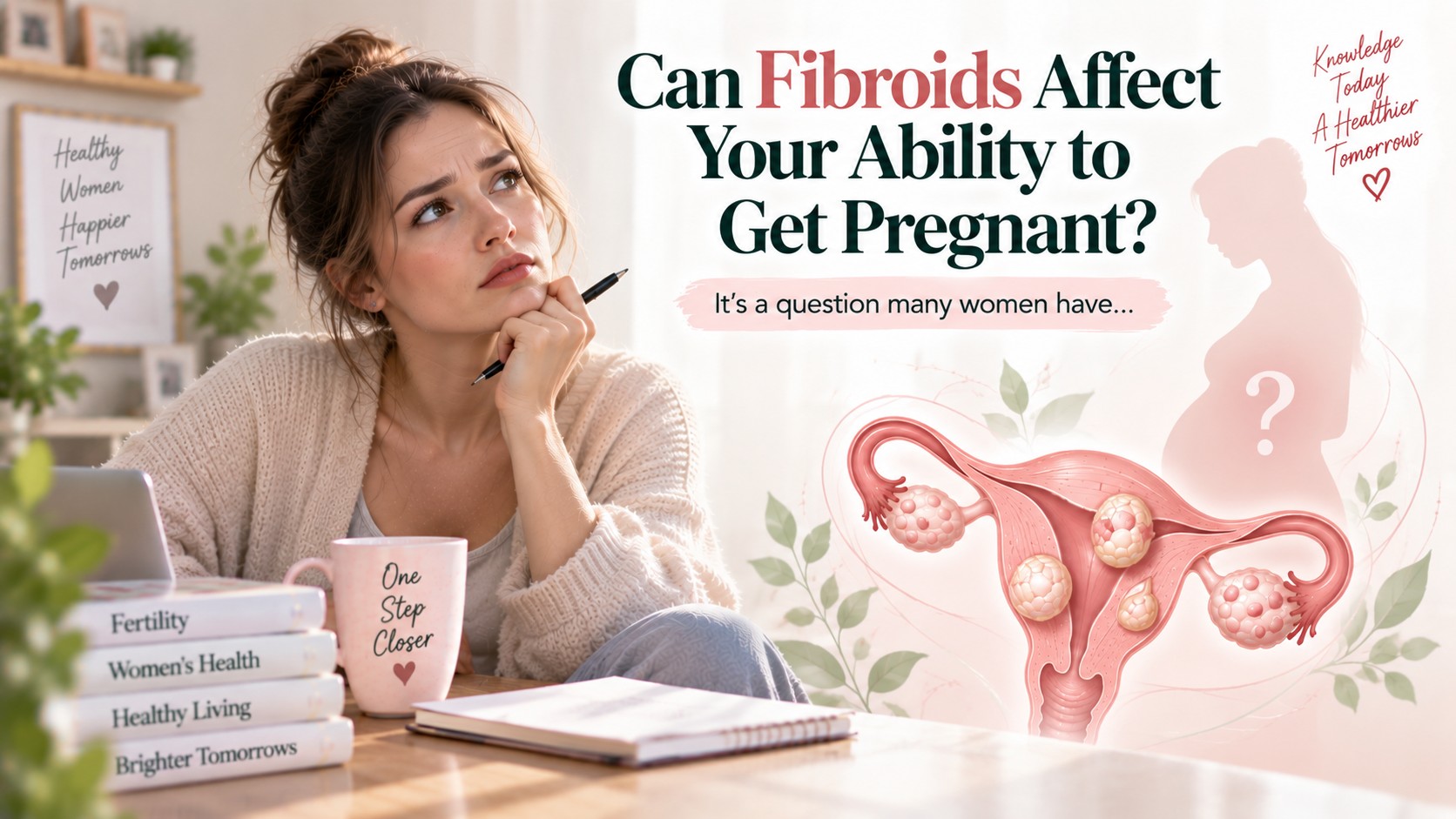
Fibroids (also called leiomyomas or myomas) are non-cancerous growths made of muscle and fibrous tissue that develop in or around the uterus. They can range from as small as a seed to large enough to change the shape of the uterus, and a woman can have just one or several at a time.
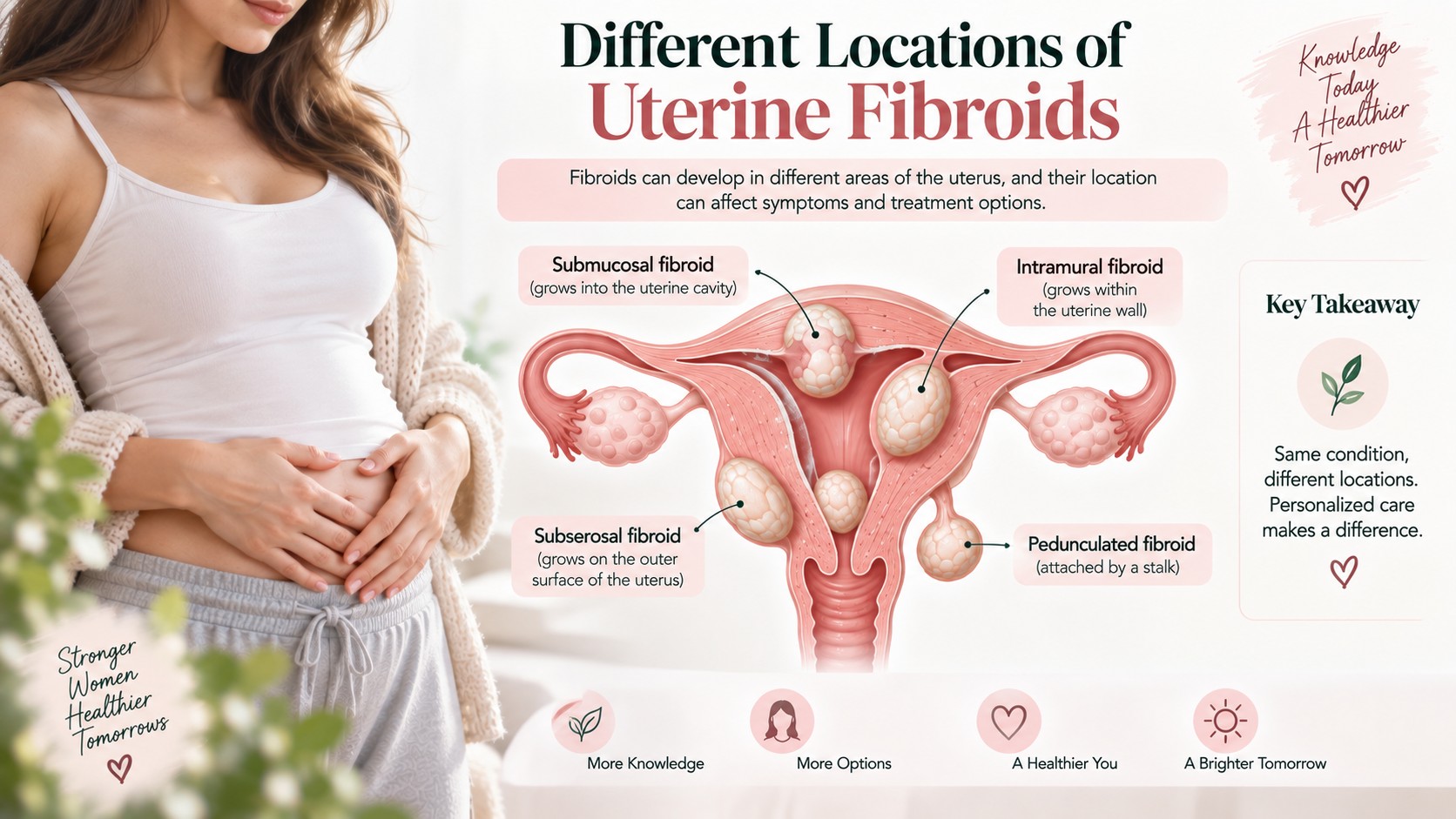
Types of fibroids, by location
- Intramural fibroids — grow within the muscular wall of the uterus. This is the most common type.
- Subserosal fibroids — grow on the outer surface of the uterus and can sometimes press on nearby organs.
- Submucosal fibroids — grow just under the lining of the uterine cavity and are more likely to cause heavy bleeding, even when small.
- Pedunculated fibroids — attached to the uterus by a thin stalk, growing either inside or outside the uterine wall.
Common symptoms
Many fibroids cause no symptoms at all. When symptoms do occur, they often relate to size, number, or location, and may include:
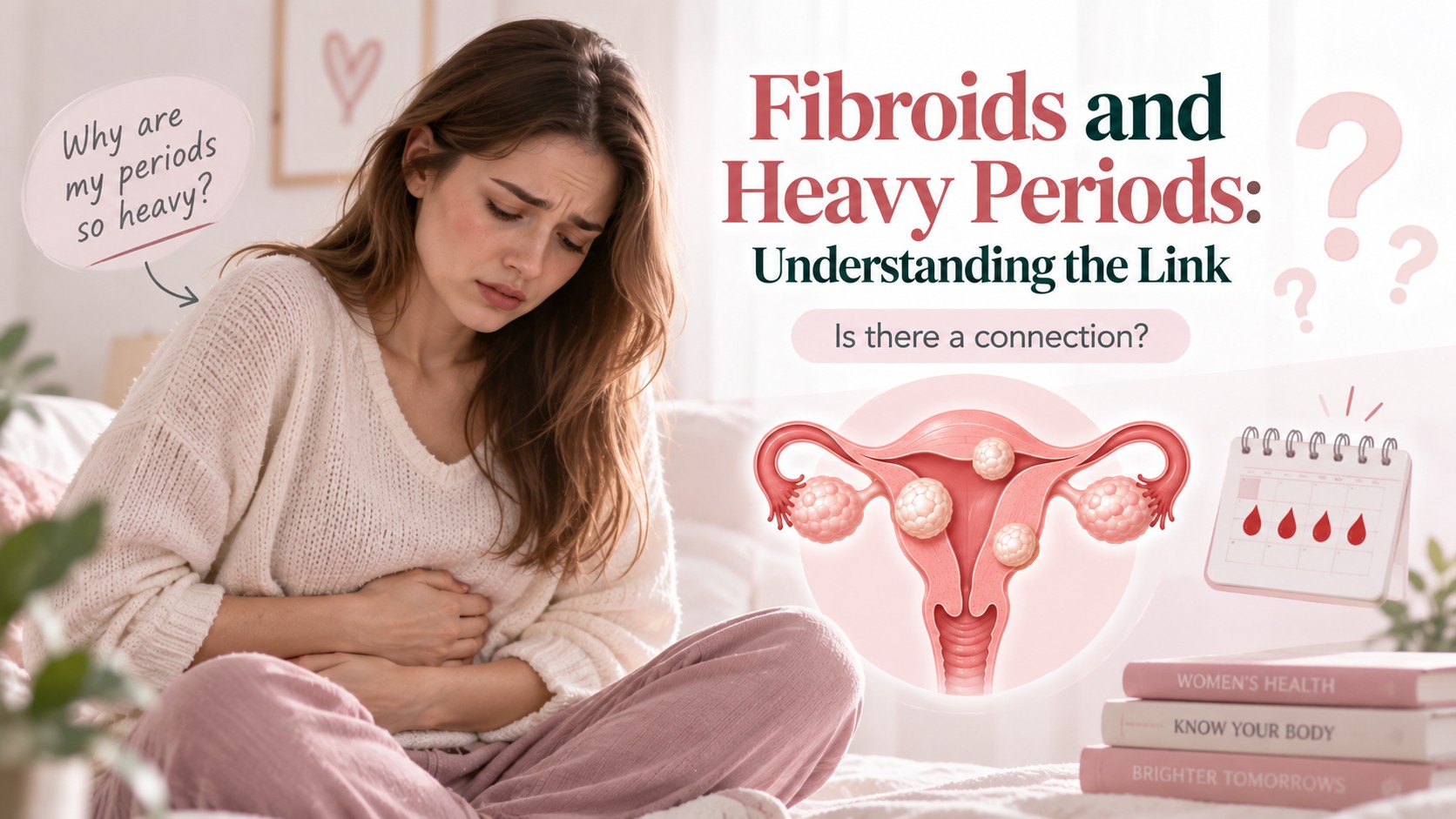
- Heavy or prolonged menstrual bleeding.
- Pelvic pressure or a feeling of fullness in the lower abdomen.
- Frequent urination, if a fibroid presses on the bladder.
- Pain during intercourse.
- Backache or leg pain, in some cases.
If any of these sound familiar, it's worth mentioning to a healthcare professional rather than assuming it's simply a "heavy period." Related reading: fibroids and heavy periods, explained.
What may contribute to fibroid growth
The exact cause of fibroids isn't fully understood, but research points to a few contributing factors:
- Hormones — estrogen and progesterone appear to promote fibroid growth, which is part of why fibroids often shrink after menopause.
- Genetics — a family history of fibroids increases the likelihood of developing them.
- Age — fibroids become more common as women approach their 40s, though they can appear earlier.
Other things linked with a higher chance of fibroids include starting your period at a young age and carrying extra body weight. Black women are more likely to develop fibroids, and often at a younger age. Having a risk factor does not mean you will get fibroids. It simply helps you and your provider know what to watch for.
Fibroid myths vs facts
- Myth: Fibroids are a type of cancer. Fact: Fibroids are benign, which means not cancer. It is very rare for a growth in the uterus that looks like a fibroid to be cancerous.
- Myth: Fibroids always need surgery. Fact: Many fibroids cause no problems and simply need to be checked from time to time.
- Myth: You cannot get pregnant if you have fibroids. Fact: Many women with fibroids conceive and have healthy pregnancies. Location matters most.
- Myth: Fibroids keep growing forever. Fact: Growth varies a lot. Some stay the same size for years, and most shrink after menopause when hormone levels drop.
How fibroids are typically diagnosed
Fibroids are usually found during a routine pelvic exam and confirmed with a pelvic ultrasound. In some cases, additional imaging such as an MRI may be used to map out size and location in more detail before deciding on a care plan.
How fibroids are managed: an overview
There is no single plan that fits everyone. The right approach depends on your symptoms, the size and location of your fibroids, your age and whether you want to get pregnant in the future. In general, care falls into three groups:
- Watchful waiting. If fibroids are not causing trouble, your provider may simply recheck them with an exam or ultrasound over time.
- Medications. Options a doctor may discuss include medicines that ease heavy bleeding or pain, and hormone-based treatments that may shrink fibroids for a time.
- Procedures. For fibroids that cause bigger problems, there are options that remove the fibroids, cut off their blood supply, or in some cases remove the uterus. Each has different effects on future pregnancy.
If you are thinking about a baby now or later, share that at your first visit. It helps your provider choose options that protect your plans. Our guide on fibroids and getting pregnant covers this in more detail.
Everyday habits that support your health with fibroids
Lifestyle changes cannot make fibroids disappear, but they can help you feel your best and support your overall health.
- Fill your plate with plants. Vegetables, fruits, whole grains and beans add fiber and nutrients. Some research links diets rich in fruits and vegetables with a lower risk of fibroids.
- Get enough iron if your periods are heavy. Leafy greens, beans, lentils and lean meats are good sources.
- Move regularly. Walking, swimming, yoga or any activity you enjoy supports a healthy weight and may ease cramps.
- Keep alcohol low and stay well hydrated.
- Track your cycle. Notes on bleeding, pain and pressure make check-ups more useful.
Questions to ask after a fibroid diagnosis
- How many fibroids do I have, and where are they?
- Are they likely to explain my symptoms, or could something else be going on?
- How often should we recheck them?
- What are my options if symptoms get worse, and how might each affect a future pregnancy?
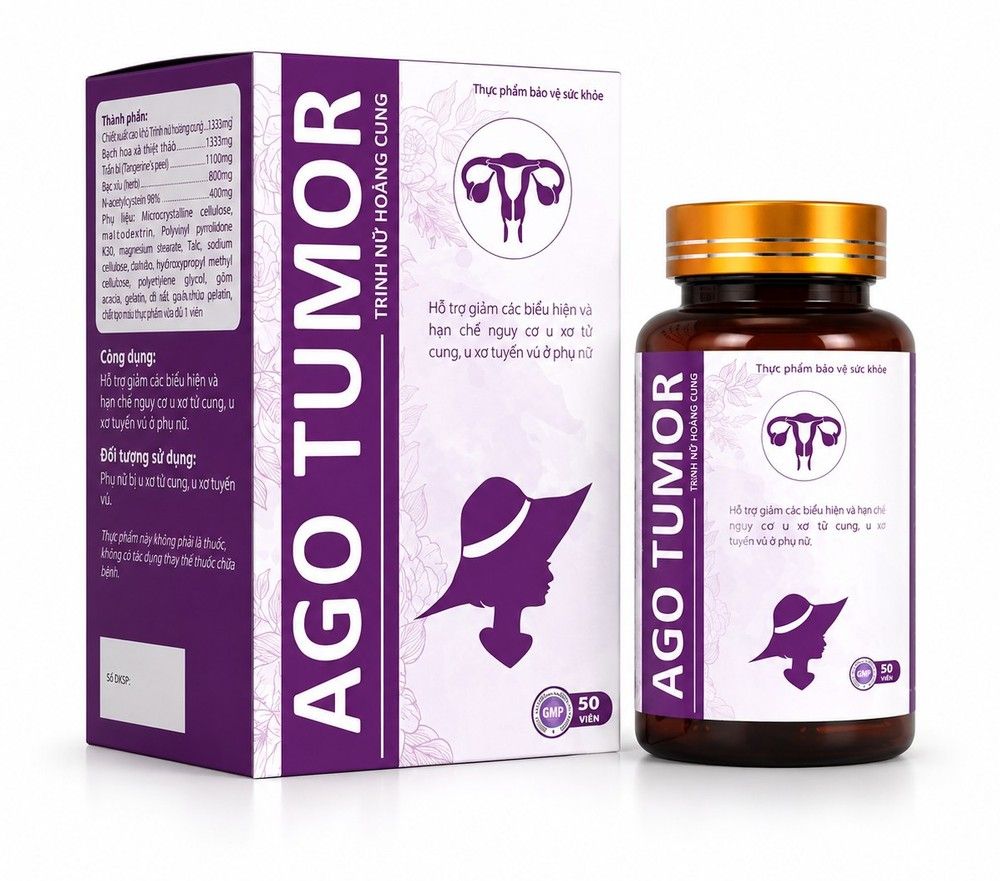
AGO Tumor is formulated to help support the health foundation of women managing fibroids or cysts, as part of a broader care routine alongside medical guidance.
Wondering if your symptoms could be fibroids?
Message AGO Fertility Care and share what you've been experiencing — bleeding pattern, pain, or pressure. We'll help you understand possible next steps and a supportive care routine.
Chat With AGO on WhatsApp