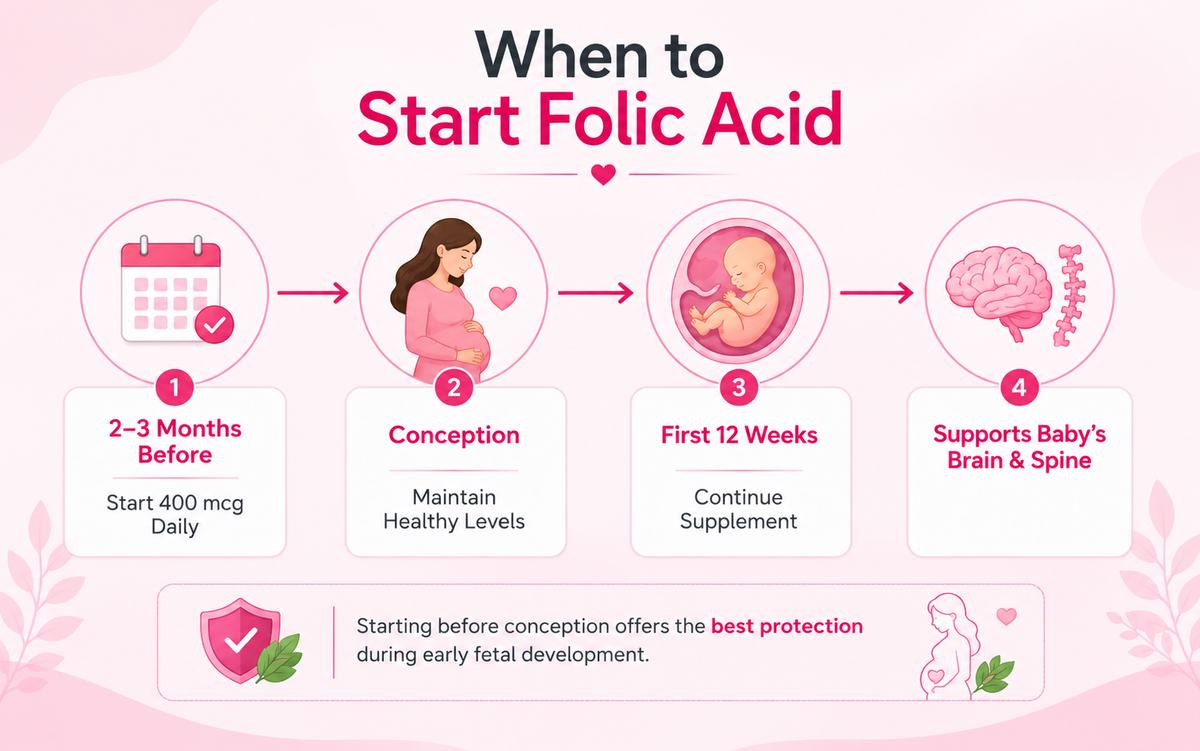
The CDC recommends that anyone who could become pregnant take 400 micrograms (mcg) of folic acid every day, starting at least one month before trying to conceive and continuing through pregnancy. If you've had a previous pregnancy affected by a neural tube defect, or have certain health conditions, your doctor may recommend a higher dose.
Folic acid is one of the few supplements almost every health organization agrees on for pregnancy planning. Still, the details can feel confusing: how much is enough, when to start, whether folate is better, and what to look for on a label. Here is a clear guide to taking a folic acid supplement before and during pregnancy.
Folate is a B vitamin (B9) your body uses to make new cells and copy DNA. During early pregnancy, cells divide very quickly, so the need for folate rises.
Its best-known role is in forming the neural tube, the structure that becomes the baby's brain and spinal cord. The neural tube closes within about the first four weeks after conception. That is often before a person knows they are pregnant, which is why the advice is to start taking folic acid before you conceive, not after a positive test.
Getting enough folic acid early is linked with a lower risk of neural tube defects such as spina bifida. Folate also supports the making of red blood cells, which matters because blood volume increases throughout pregnancy.
For most people, the guidance is simple:
More is not automatically better. For adults, the recommended upper limit from supplements and fortified foods is 1,000 mcg per day unless a doctor advises otherwise, partly because very high intake can hide signs of a vitamin B12 deficiency. If you're unsure, bring your supplement bottle to your next appointment and ask.
These words are often used interchangeably, but they aren't quite the same.
You may have heard about MTHFR, a common gene variant that affects how the body processes folate. Public-health guidance in the US still recommends folic acid for people with common MTHFR variants. If you have questions about which form suits you, that's a good conversation to have with your doctor.
A folate-rich diet is a wonderful foundation, and it supports far more than pregnancy. Good everyday sources include:
Even so, it's hard to reach the recommended amount reliably through food alone, and natural folate can be lost during cooking. That's why a daily supplement is recommended in addition to a healthy diet, not instead of it. For more ideas on building a fertility-friendly plate, read our guide to fertility nutrition.
You don't need an expensive product to meet the recommendation. When you compare options, look for:
Check the total across everything you take. If you use a prenatal vitamin and another supplement that also contains folic acid, the amounts add up.
The best supplement is the one you remember. A few simple habits help:
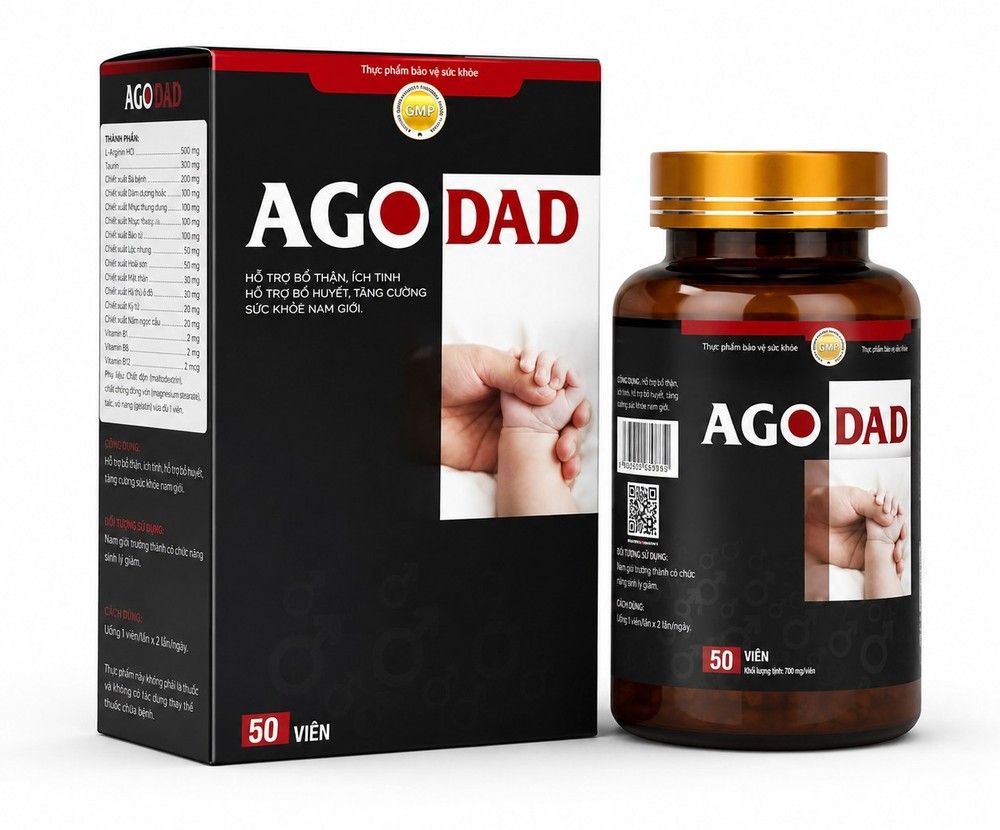
If your partner wants to join in, a shared morning routine makes it easier for both of you. Healthy habits before conception matter for men too, since sperm take around two to three months to develop.
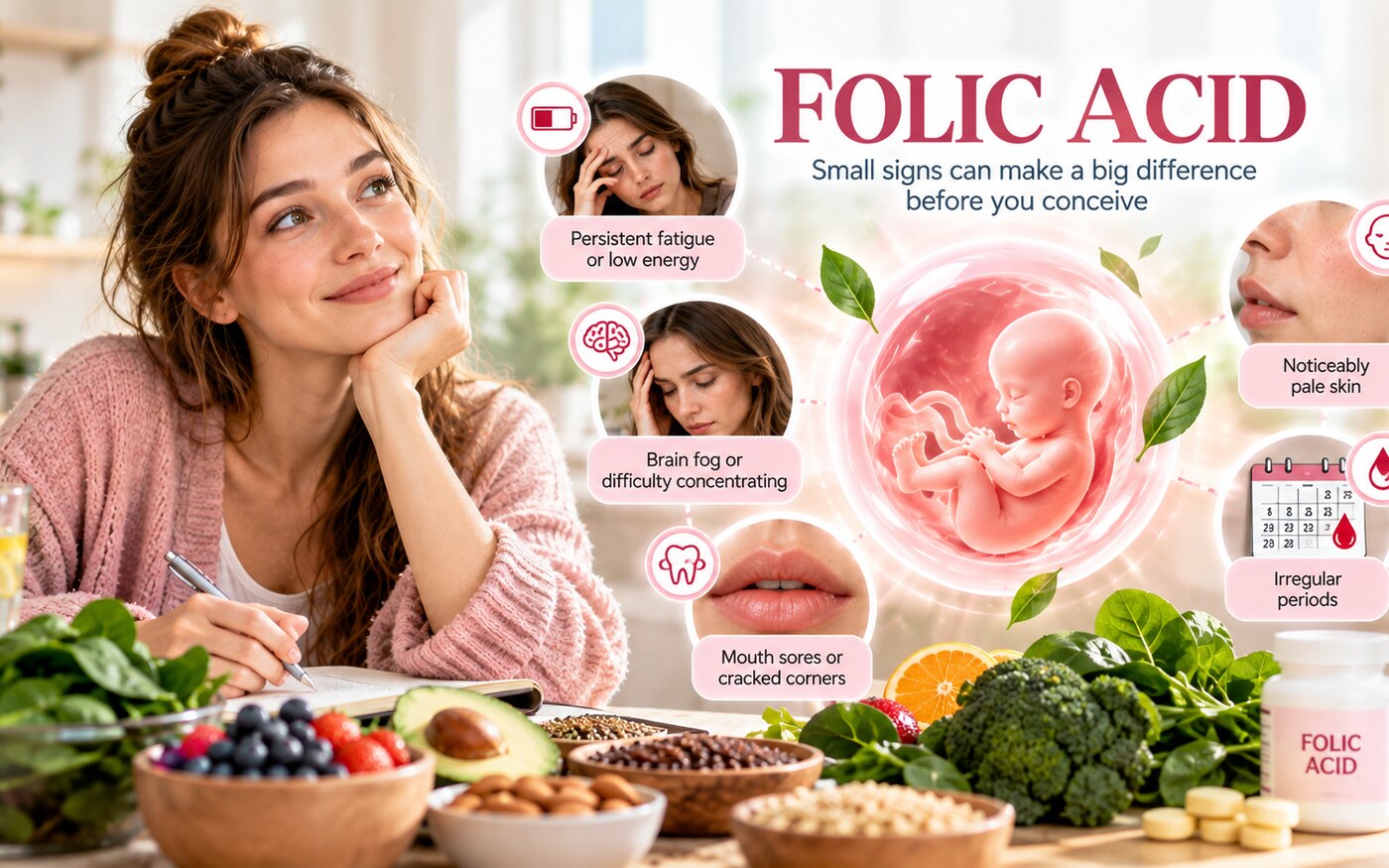
Low folate can sometimes cause tiredness, weakness, pale skin, mouth sores or shortness of breath, often linked to a type of anemia. These symptoms have many possible causes, so a blood test is the only way to know for sure. We cover this in more detail in signs you might need more folic acid before pregnancy.
Folic acid works best as part of a wider foundation: balanced meals, steady sleep, regular movement and less stress. Some women prefer a formula that combines folic acid with other nutrients for cycle and hormone support. Mẫu Nguyệt Đà+ combines inositol and folic acid, and AGO Mama provides calcium, vitamins and minerals for before, during and after pregnancy. Both are formulated to help support your body as part of a broader routine, alongside medical guidance.
Message AGO Fertility Care to talk through your preconception routine. We'll help you understand your needs and suggest supportive nutrition that fits your situation.
Chat With AGO on WhatsApp