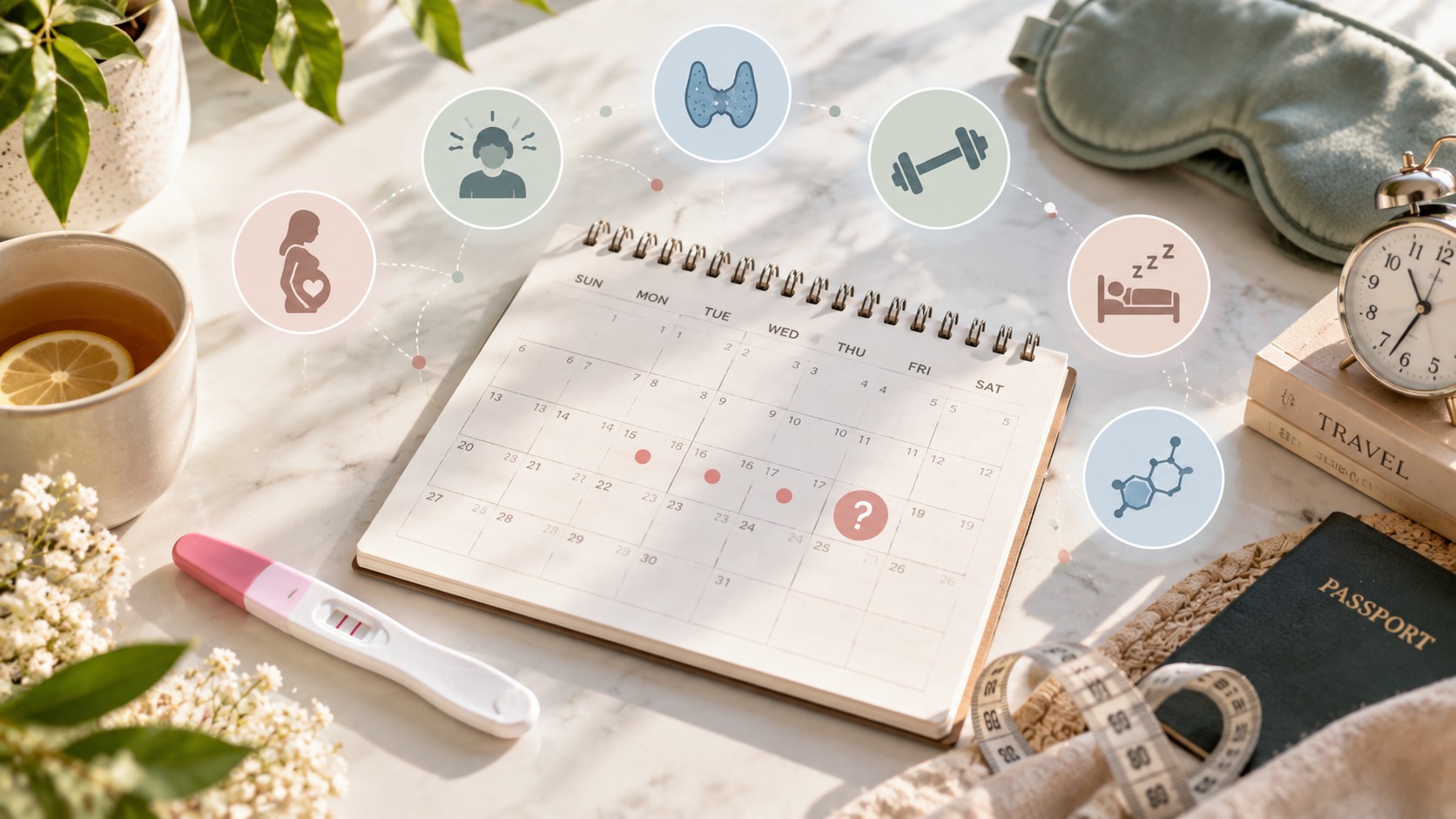
If your period is late but you're not pregnant, the most common reasons are testing too early, ovulating later than usual, stress, sudden changes in weight or exercise, and hormone conditions such as PCOS or thyroid imbalance. Retest in a few days. If your period still hasn't come after three months, check in with a healthcare provider.
Few things feel as confusing as a late period paired with a negative test. Your mind races through every possibility, and the waiting can feel endless. The good news is that a period late but not pregnant is very common, and in most cases the reason is temporary. Before assuming the worst, it helps to understand how your cycle works and which everyday factors can shift it. Here's what may be going on, and what you can do next.
A typical menstrual cycle lasts anywhere from 21 to 35 days, counted from the first day of one period to the first day of the next. Cycle length can shift by a few days from month to month, and that's normal. A period is usually considered late when it hasn't started five or more days after you expected it. Being two or three days late is very common and often nothing to worry about. If your cycles are often irregular, it can be hard to know when a period is truly late, which is one reason tracking your cycle is so helpful.
Home pregnancy tests look for hCG, a hormone your body starts making after a fertilized egg implants. Levels rise quickly, but in the first days after a missed period they can still be too low to detect.
If your test is negative and your period still hasn't arrived, wait three to seven days and test again before drawing conclusions.
Some medications, illness and travel across time zones can also shift your cycle. For a deeper look, read Delayed Period: Common Causes.
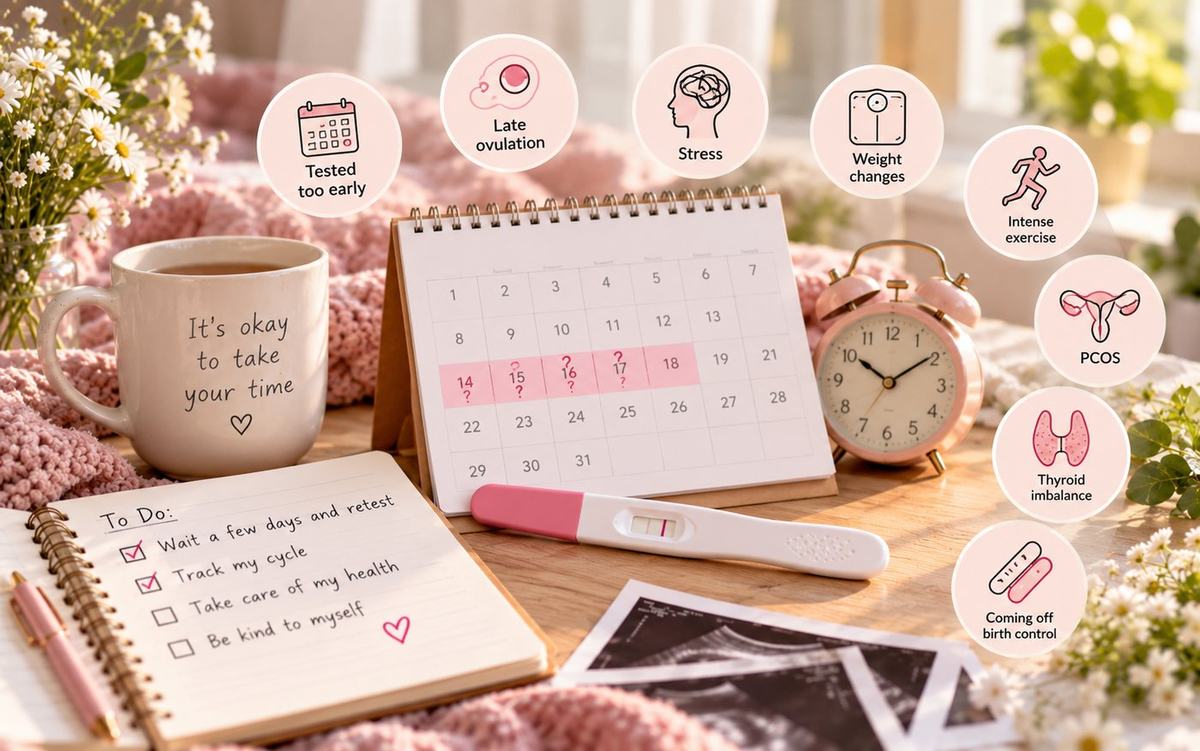
This small routine turns a stressful wait into clear, useful information about your body.
One late period now and then is usually nothing to worry about. Make an appointment if:
A provider may suggest a blood pregnancy test, hormone tests or an ultrasound to understand what's happening.
A late period can feel like it belongs to one person, but fertility is a shared journey. If your cycles have been unpredictable for a while, it's a good time for both partners to get a basic check-up. For him, a simple semen analysis can give useful information early, so the focus doesn't fall on only one of you. Talk openly about how the waiting feels, too. Going through each cycle as a team makes the uncertainty easier to carry.
A steady cycle starts with the basics: regular sleep, balanced meals, movement you enjoy and ways to manage stress. Some women also add targeted nutrition to support their hormonal foundation. AGO Eva and Mẫu Nguyệt Đà are formulated to help support menstrual-cycle regularity as part of a broader care routine, alongside medical guidance when it's needed.
Message AGO Fertility Care and tell us about your cycle. We'll help you understand what may be going on and suggest a personalized care routine.
Chat With AGO on WhatsApp